
REVIEW · JAPAN
Tokyo : Asakusa Food Tour – 12 Dishes & 3 Drinks
Asakusa is at its best when the temple crowds thin and the neighborhood turns toward dinner. This three-hour evening tour leads you through local restaurants, a sake bar, Hoppy Street, and a taiyaki shop while serving 12 Japanese dishes and 3 drinks, so you get a broad first taste of old Tokyo food culture in one outing.
I like the mix of a sit-down local izakaya meal and a guided sake tasting. I also like the small, social format, capped at 15 people, and the chance to see Senso-ji lit at night. The main drawback is that the tour is English only, and extras require cash.
Key points at a glance
- Twelve dishes in three hours: You sample far more than one restaurant meal, including savory pancakes, yakisoba, sweets, and other Japanese favorites.
- Okonomiyaki and monjayaki: The tour introduces you to the savory pancake tradition associated with old downtown Tokyo.
- Three drinks included: A sake stop gives you several styles to taste, from dry and crisp to sweet and fragrant.
- Asakusa after dark: Hoppy Street and illuminated Senso-ji add a useful neighborhood walk between food stops.
- Guides such as Ai and Nonoka: The experience depends on an English-speaking local guide who explains the food and helps the group settle into each stop.
- Small group, simple meeting point: The group meets at the Kaminarimon Police Box and returns there after about three hours.
Why an evening food tour fits Asakusa
Asakusa is famous for Senso-ji, but its food culture deserves more than a quick snack near the temple gate. The area has old-fashioned restaurants, casual drinking spots, and dishes tied to Tokyo’s downtown neighborhoods. A food tour gives you a reason to stay after sunset, when the temple grounds look different and the streets feel less rushed.
The starting point is easy to identify: the Kaminarimon Police Box at 1-chome-3-1 Asakusa. The tour begins at 6:30 pm and ends back at the meeting point. That timing works well if you spend the afternoon elsewhere in Tokyo and want dinner to be part of your evening plans.
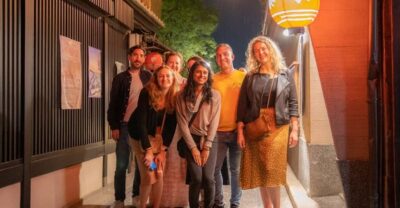
You should expect a walking-and-eating experience rather than a formal cooking class. The guide takes you between several food stops, explains what you are eating, and helps connect the dishes to everyday Japanese dining. Since the maximum group size is 15, you are not dealing with a huge crowd, though the experience can still feel social.
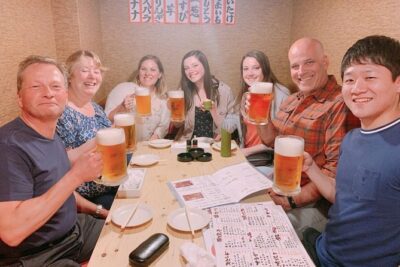
That social side is part of the appeal. You may be sharing a table with people from several countries, and the tour is designed to help you meet others along the way. If you prefer to eat alone and move at your own pace, this format may feel more structured than you want.
A few more bar nights around Japan worth a look
- Tokyo Bar Hopping Tour in Shinjuku (All-You-Can-Drink + Dinner)
★ 5.0 · 3,587 reviews - Best of Shinjuku: Izakaya Food Tour (4 Stops, 14+ Tastings)
★ 5.0 · 1,863 reviews - Tokyo: Shinjuku Local Bar and Izakaya Guided Walking Tour
★ 4.9 · 1,794 reviews
The first plate: savory pancakes at Rokumonsen Honten
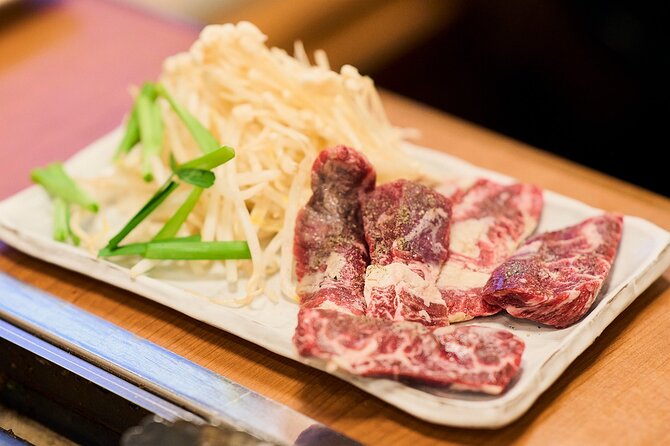
The first major stop is Rokumonsen Honten, where you try a savory Japanese pancake. The schedule describes this as okonomiyaki, while the overall experience also highlights monjayaki, another downtown Tokyo favorite. Both belong to the broad family of cooked, savory batter dishes, but they do not offer exactly the same texture or style.
At many Japanese restaurants, the food is cooked in front of you. That changes the meal from a simple plate of food into a small piece of theater. You can watch the cooking process, then eat the dish while it is hot.
The timing here is about 50 minutes, long enough for an explanation and a proper meal rather than a quick sample. The pancake is a good opening course because it introduces one of Japan’s most recognizable casual foods in the setting where it is commonly enjoyed: a lively restaurant with a hot cooking surface at the table or nearby.
One detail worth noting is the mention of a Tokyo pancake with Camembert. The supplied tour information does not confirm that this exact version is served on every departure, so do not book expecting a guaranteed cheese combination. Still, the detail gives you a sense of the creative toppings that may appear.
If you have never eaten okonomiyaki or monjayaki, listen closely to the guide’s explanation. The difference is not just a matter of names. Texture, preparation, and regional habits all shape how these dishes are enjoyed. This is one of the most useful parts of the evening for a first-time visitor because you get context along with the food.
Sake tasting at Wasake Sake Experience
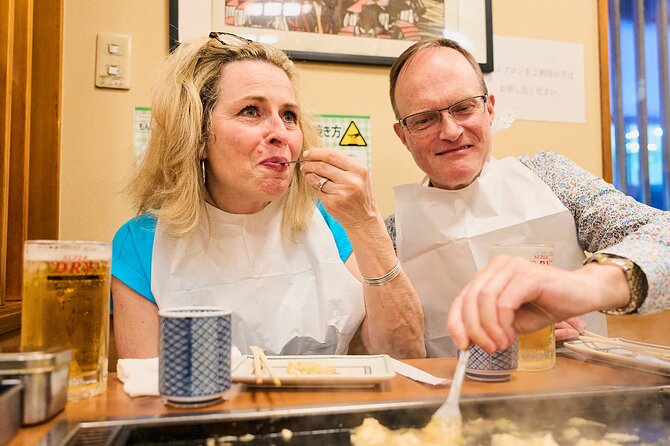
The second main stop is Wasake Sake Experience, with about 50 minutes set aside for tasting and explanation. You try several varieties of sake, with the included drinks forming a central part of the tour rather than a minor extra.
Sake can be crisp and dry, fragrant, sweet, or somewhere in between. The guide explains how it is made, how to taste it, and how different styles work with food. That guidance matters because a first sake order can otherwise feel like a blind guess from a long menu.
I like this stop because it gives you a way to identify your own preference. You may find that you prefer a clean, dry style, or you may discover that a sweeter or more aromatic sake suits you better. The point is not to turn you into a sake expert in 50 minutes. It is to give you enough information to make better choices later in Japan.
The tour includes three drinks, but you should bring cash for anything beyond what is covered. This is important in practical terms. A sake bar can make it tempting to order one more glass, and you will need to pay for those extras yourself.
The tour is also conducted in English only. Guides such as Ai and Nonoka have received especially strong praise for being friendly, clear, and helpful during the food and drink portions. Your experience will depend partly on the guide assigned to your group, but the format calls for active explanation rather than simply being led from one venue to the next.
A stroll through Hoppy Street
Hoppy Street adds a change of pace after the indoor food stops. This well-known Asakusa area is associated with casual drinking and old-style neighborhood dining. You do not simply spend the whole evening seated at one restaurant. You get a short look at how the district works as a place to eat and socialize.
The walk is also useful for digestion. Twelve dishes and three drinks is a generous amount of food for three hours, and the movement between stops breaks up the meal. You should still arrive hungry, but not so hungry that you rush the first course.
The tour description does not promise a separate tasting at every location along Hoppy Street, so think of this part as a neighborhood walk rather than a guaranteed food stop. Your guide can point out the area and offer tips for enjoying Asakusa, while the planned dishes and drinks come from the specified restaurants and shops.
Same city, a completely different last round:
- Shibuya Meltdown Nightlife Tour: All-You-Can-Drink Bar Hopping
★ 5.0 · 1,058 reviews - Osaka Bar Hopping Night Walking Tour in Namba (3 bars, 6 tastes)
★ 5.0 · 958 reviews - Tokyo: Pub Crawl and Bar Tour
★ 4.5 · 951 reviews - Tokyo: Shinjuku Local Bar & Izakaya Crawl Tour
★ 5.0 · 890 reviews
Taiyaki Sawada and the fish-shaped finish
Dessert comes at Taiyaki Sawada, Asakusa Shop. Taiyaki is a warm, fish-shaped pancake with a filling, and it is one of Japan’s most recognizable casual sweets. The stop lasts about 15 minutes, so this is a quick final bite rather than a long dessert course.
The shape is part of the fun, but the appeal is also practical. Taiyaki is easy to eat while walking, and its warm batter makes a nice contrast with the savory dishes earlier in the evening. The tour information says you can choose the filling you would like, though it does not specify all available options.
The wider food lineup also includes convenience-store ice cream. That may sound simple, but it fits the tour’s goal of showing more than restaurant food. Japanese convenience stores are an everyday part of the food scene, and a packaged dessert can tell you something about ordinary eating habits that a formal restaurant cannot.
Do not expect every dish to be a full serving. To reach 12 dishes in three hours, some items are likely to be smaller portions or quick tastes. That is a good thing if you want variety, but it is worth knowing if you are hoping for three large meals.
Senso-ji after sunset
The final listed stop is Senso-ji, Tokyo’s oldest temple, viewed at night. The visit lasts about 10 minutes and admission is free. This is not a full temple tour, but it adds an important sense of place to the food walk.
Senso-ji can be packed during the day. Seeing the temple illuminated after the main daytime rush gives you a quieter visual moment, even if the surrounding district remains active. The short stop is enough to admire the setting and take photos without turning the evening into a long sightseeing lecture.
I especially like this pairing of food and temple. Asakusa makes more sense when you see both sides: the spiritual landmark and the casual dining streets around it. The temple stop also gives the tour a clean finish before you return to the meeting point.
What the $89.83 price includes
At $89.83 per person, this is not the cheapest way to have dinner in Tokyo. The value comes from combining a substantial food lineup, three drinks, several venues, a local guide, and a neighborhood walk in one booking.
You are paying for variety and guidance. Instead of ordering one dish at a restaurant and guessing what to try next, you get a planned introduction to several Japanese foods. The included sake tasting is another cost that can add up if arranged separately, especially if you want to compare several styles.
The price makes the most sense on your first visit to Tokyo, when you want help choosing food and would rather not spend your first evening working out the menu system alone. It is also useful if you have only a short stay and want food, a local bar, and nighttime Asakusa in one compact activity.
The value is weaker if you already know Japanese food well, speak Japanese comfortably, and feel happy ordering your own meals. You may prefer to spend $89.83 across several independent dinners. This tour is about convenience, explanation, and range, not simply getting the lowest possible meal price.
Group size, language, and practical planning
The group limit is 15 people, which is small enough for a guide to keep the evening moving and answer questions. It is not a private tour, so you should expect some shared-table conversation and a set schedule.
The experience is conducted in English only, with no Japanese language support. That is clear and important. If you need another language, this is not the right choice based on the supplied information.
Bring cash. The included food and drinks are covered, but any extras must be paid for in cash. It is also sensible to arrive ready for a full evening of eating. The tour includes many tastes, so a large meal immediately beforehand would defeat the point.
Most people can participate, and wheelchair access can be arranged by changing the restaurant reservation if you notify the provider in advance. Because the route includes restaurants and a neighborhood walk, you should make that request before the tour rather than at the meeting point.
Cancellation is free up to 24 hours before the 6:30 pm start time. Inside that window, the payment is not refunded, and changes are not accepted. The cut-off uses Tokyo local time.
Who will enjoy this Asakusa food walk
I would recommend this tour to first-time visitors who want an easy introduction to Japanese food without spending an evening decoding menus. It also suits solo visitors and couples who like meeting people, since the small group gives the night a friendly shared feel.
It is a good match for anyone curious about sake, especially if you have never compared different styles. The guide’s explanations at Wasake can help you make sense of a drink category that often seems intimidating at first.
Families and mixed-age groups should consider the three drinks and the evening schedule before booking. The tour includes plenty of food, but the alcohol component is not incidental. People who want a quiet temple visit should also know that the food and social side takes priority.
You may want another option if you have strict dietary needs, since the available information does not list vegetarian, vegan, allergy, or other menu adjustments. Ask the provider before booking if those details matter to you.
Should you book the Tokyo Asakusa Food Tour?
Book it if you want a guided first taste of Asakusa, enjoy trying many small portions, and like the idea of comparing sake in a local bar. The combination of savory pancakes, yakisoba, convenience-store ice cream, taiyaki, sake, Hoppy Street, and nighttime Senso-ji gives you a broad evening rather than one isolated meal.
I would be particularly happy to choose it early in a Tokyo visit. The information from the guides Ai and Nonoka suggests that the human side of the tour is a major strength, with clear English, local tips, and a warm approach.
Skip it if you dislike group dining, do not drink alcohol, need a language other than English, or want large portions at the lowest price. For everyone else, $89.83 buys a well-filled evening and a useful introduction to the food traditions of old Tokyo.
FAQ
How long does the Asakusa food tour last?
The tour lasts approximately three hours.
What time does the tour begin?
The tour starts at 6:30 pm.
Where does the tour meet?
The meeting point is the Kaminarimon Police Box at 1-chome-3-1 Asakusa, Taito City, Tokyo 111-0032, Japan.
Where does the tour end?
The activity ends back at the meeting point.
How many dishes and drinks are included?
The tour includes 12 Japanese dishes and 3 drinks.
Is the tour conducted in English?
Yes. The tour is conducted in English only, and Japanese language support is not available.
What are some of the foods included?
The experience includes savory Japanese pancakes such as okonomiyaki, yakisoba, convenience-store ice cream, and taiyaki. The tour also includes a sake tasting.
Is Senso-ji included in the tour?
Yes. The group visits Senso-ji Temple for about 10 minutes, with free admission.
Can I cancel for a full refund?
Yes. You can cancel at least 24 hours before the start time for a full refund. Cancellations and changes made less than 24 hours before the start time are not accepted or refunded.
Just added around Japan
- Tokyo night out★ 5.0 · 3 reviews
- Izakaya & Bar Hopping Tour Around Aomori Station★ 5.0 · 3 reviews
- Asakusa Foods & Drinks, Culture Nightlife★ 5.0 · 5 reviews
- Tokyo: The Best Izakaya Tour in Shibuya★ 4.7 · 15 reviews
- Tokyo: Shinjuku Nightlife Tour with Karaoke and Bar Hopping★ 4.1 · 4 reviews
- Tokyo:Shinjuku Ni-chome LGBTQ+ Bar Hopping Tour with Guide★ 5.0 · 2 reviews
- Tokyo: Shinjuku Golden Gai Bar Hopping that only locals know★ 5.0 · 5 reviews
- Tokyo: Shinjuku Hidden Japanese Bar Tour (Neon Light City)★ 5.0 · 4 reviews
Japan Bar Tours, compared.
Tokyo Bar Hopping Tour in Shinjuku (All-You-Can-Drink + Dinner)
Read our review →
Best of Shinjuku: Izakaya Food Tour (4 Stops, 14+ Tastings)
Read our review →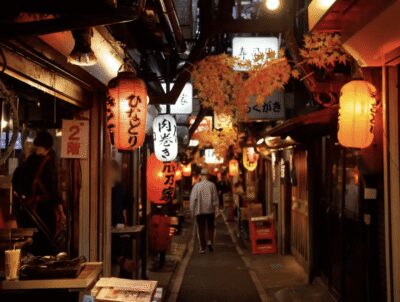
Shinjuku Local Bar and Izakaya Guided Walking Tour
Read our review →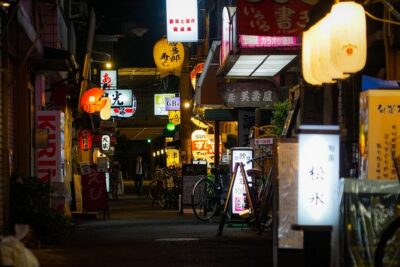
Osaka Bar Hopping Night Walking Tour in Namba (3 bars, 6 tastes)
Read our review →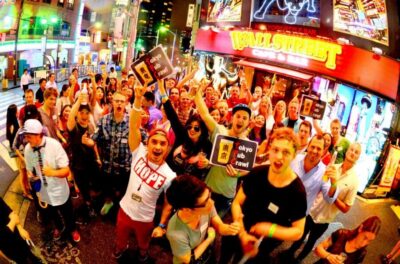
Browse the lists this tour appears in