
REVIEW · OSAKA
Osaka: 2-Hour Nightlife District Walking & Local Food Culture
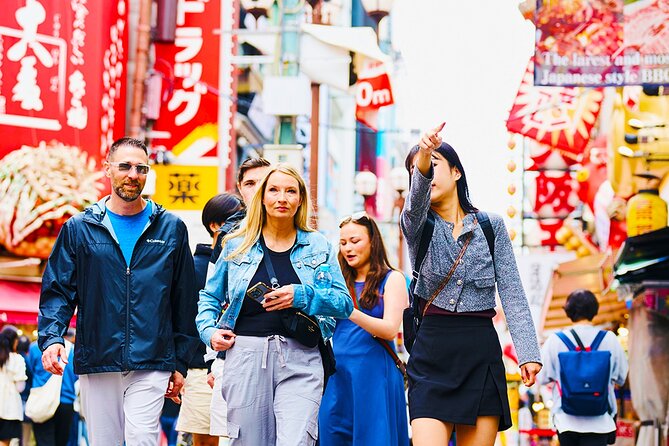
Osaka’s food culture comes into focus on foot, one small stop at a time. This two-hour tour links the famous Dotonbori Glico sign with Hozenji Temple, Doguyasuji’s professional kitchenware shops, and Kuromon Market. Guides such as Kaz, Nako, and Sayaka have helped guests see more than the usual neon streets.
I like the route for two clear reasons: it joins food and local life, rather than treating Osaka as a string of photo stops, and the small-group format, capped at 15 people, gives you a better chance to ask where to eat next. You can try takoyaki, gyoza, seafood, or other street foods, but you pay for those separately.
The main catch is simple: the $31.84 price covers the English-speaking guide, not your meals. Since the tour does not stop for sit-down dining, you should treat it as a guided tasting walk, not a full dinner.
Key points at a glance
- Four compact Namba stops: Dotonbori, Hozenji Temple, Doguyasuji, and Kuromon Market fit into about two hours.
- Food is part of the route, not part of the ticket: Takoyaki, gyoza, seafood, and other snacks cost extra.
- A useful first-day orientation: You get practical restaurant suggestions for the rest of your Osaka stay.
- A look beyond neon: The route includes a quiet temple and a street known for professional cooking tools.
- Small-group size: The maximum is 15 people, which keeps the walk more personal than a large city tour.
- Easy meeting point: Start and finish near Don Quijote Dotonbori Midosuji in Namba.
Why this Osaka food walk works
Namba can feel like a wall of signs, crowds, arcades, restaurants, and narrow lanes. That energy is fun, but it can also make it hard to know where to look. This route gives you a short, useful introduction to the district without asking you to spend half a day on a formal tour.
I like the mix. You begin with Osaka’s most recognizable image, move into a small temple lane, then shift to the practical world of kitchen tools and the food stalls of Kuromon Market. The stops do not all look alike, and that matters. You see how Osaka’s food identity connects to restaurants, cooks, markets, and everyday city life.
The guide is the real value here. An English-speaking local can point out foods you may not recognize and explain how the different parts of Namba fit together. Previous guide names include Kaz, Nako, and Sayaka, though your guide will depend on the date you book. Sayaka, in particular, has led a tour that included food, local sights, history, sake, and even a pachinko experience when the group wanted to add it.
That last detail hints at the tour’s flexible side. The set route includes four stops, but the guide can also be a useful source of ideas for later meals and activities. I would ask direct questions early: where to eat near your hotel, which Osaka foods are worth trying, and which places suit your budget.
More Nightlife Tours in Japan
- Osaka Pub Crawl and Nightlife Tour
★ 5.0 · 293 reviews - 3Hour Osaka Pub Crawl Bar Hopping Nightlife Guided Tour in Namba
★ 5.0 · 122 reviews - Deep Osaka Night Life, Eat & Drink
★ 5.0 · 17 reviews
Dotonbori Glico sign: a fast start in Osaka’s neon center
The walk begins at the Don Quijote Dotonbori Midosuji meeting point and includes the famous Glico sign. This is the part of Osaka most people picture first: bright advertising, a canal-side entertainment district, and plenty of food within easy reach.
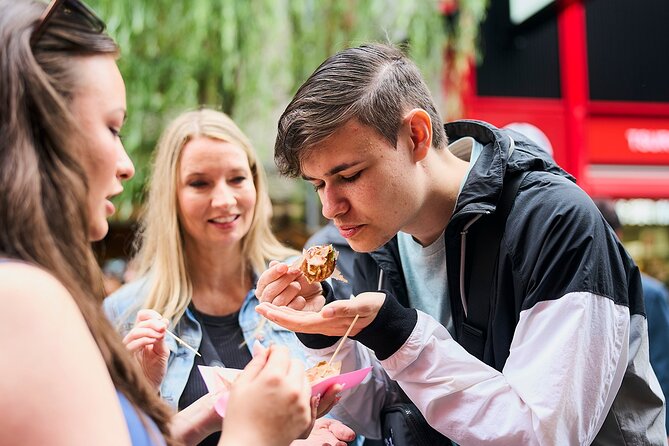
You get about 30 minutes here, listed as the first stop. That is enough time to get oriented and begin sampling street food, but not enough for a long meal. The point is not to sit down and work through a menu. Instead, your guide can help you identify familiar Osaka staples such as takoyaki and gyoza, along with foods you may not have tried before.
Takoyaki is one of the city’s signature snacks, made in round portions and usually served hot. Gyoza gives you another quick taste of the local food scene. Since food is not included, ask your guide what is worth buying before you spend your snack budget.
This opening stop suits first-time visitors especially well. You are already in a famous area, but a guide helps turn the visual overload into something more useful. You can take the classic photo, learn what to try, and get a clearer sense of where the walking route goes next.
The limitation is that Dotonbori is popular for a reason, so this is not the quietest part of the tour. If you want an intimate meal or a slow look at the canal, return later on your own. The tour uses this busy district as a starting point, not as the whole Osaka experience.
Hozenji Temple: a quiet pause in the city
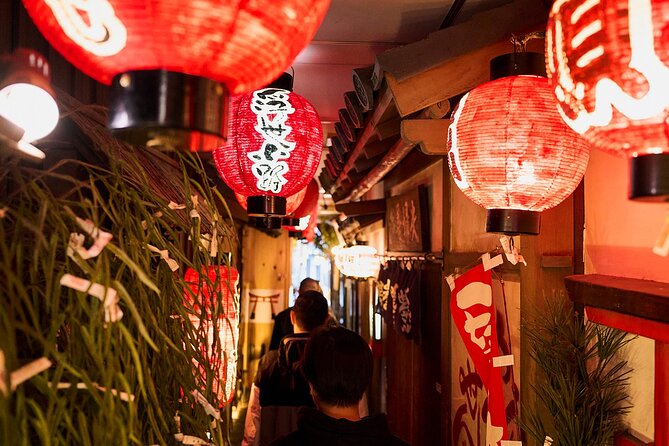
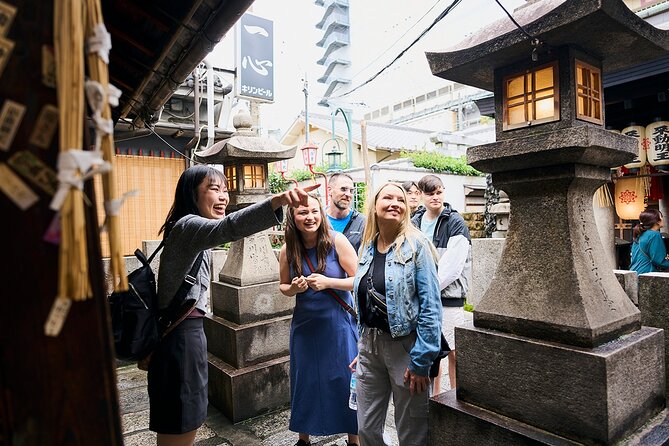
After the noise of Dotonbori, Hozenji Temple changes the pace. The temple is small and tucked into the city, with an atmospheric lane and a moss-covered statue of Fudo Myo-o. Visitors traditionally splash water on the statue while making a wish.
You have about 20 minutes here. That may sound brief, but it fits the scale of the place. Hozenji is not a vast temple complex that needs a long visit. Its appeal comes from the contrast: only a short distance from the bright restaurant streets, you find a quieter religious site with a strong sense of place.
I like this stop because it keeps the tour from becoming a food crawl with no context. Osaka is not only eating and neon. A brief visit to Hozenji shows how older customs remain part of the same district as modern entertainment.
Use the time to look closely rather than rush through a checklist. Notice the statue, the lane around it, and the change in mood from Dotonbori. Your guide can provide context and help you understand what you are seeing without turning the visit into a long lecture.
This is also a good reminder that the tour is best understood as an introduction. You get a taste of Hozenji, not an extended temple visit. If small religious sites interest you, you may want to return later when you can set your own pace.
Doguyasuji: where Osaka’s cooking tools take center stage
Sennichimae Doguyasuji Shopping Street is one of the most distinctive stops on the route. It is known for kitchen tools used by professional cooks, so the focus shifts from eating food to seeing the equipment behind it.
You have about 20 minutes here. The short visit gives you time to browse and understand why this street matters, but serious shoppers may want to come back. You might find cooking tools, restaurant supplies, and other items connected with Japan’s food trade. The supplied details do not promise a specific shopping list, so ask your guide what is practical to buy and how much time you should allow if you want to shop.
This stop adds useful depth to the food theme. You are not simply being shown famous dishes. You are also seeing the tools and shops that support Osaka’s cooking culture. For anyone who enjoys Japanese knives, tableware, cookware, or restaurant design, this may be one of the most memorable parts of the walk.
It is also a good place to ask questions. Your guide can point out items that make sense for a visitor and help you avoid buying something awkward to carry home. I would not assume the group will stop for a long shopping session. The route has another major market ahead, and the schedule moves at a steady pace.
More nightlife tours in Osaka:
- Brussels: Pub Crawl and Nightlife Party Experience
★ 4.5 · 1,501 reviews - Aruba Nightlife and Barhopping on Chogogo Party Bus
★ 4.5 · 1,201 reviews - Shibuya Meltdown Nightlife Tour: All-You-Can-Drink Bar Hopping
★ 5.0 · 1,058 reviews - St. Pauli Nightlife Tour with Drag Queen in German
★ 4.8 · 733 reviews
Kuromon Market: Osaka’s Kitchen in 30 minutes
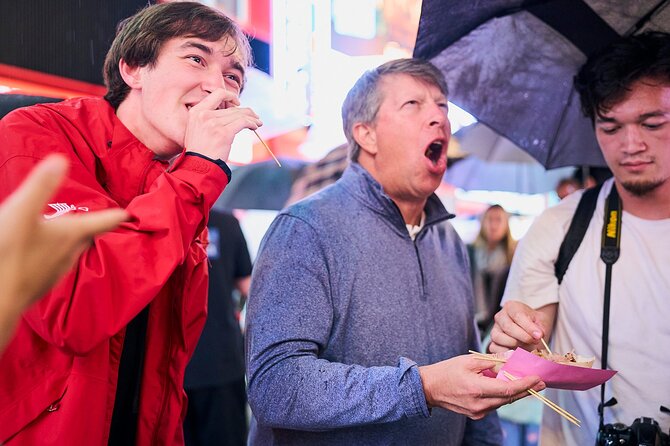
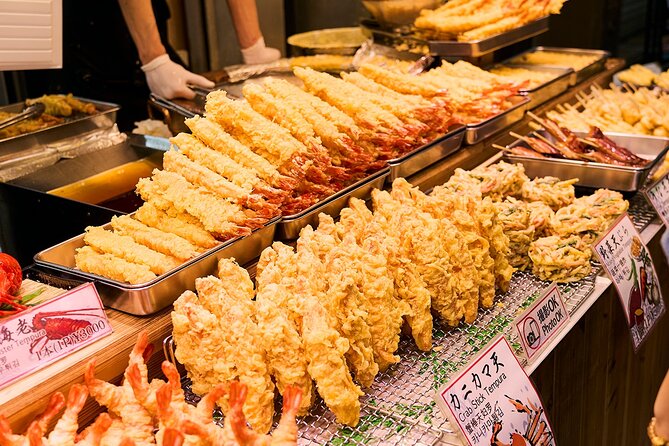
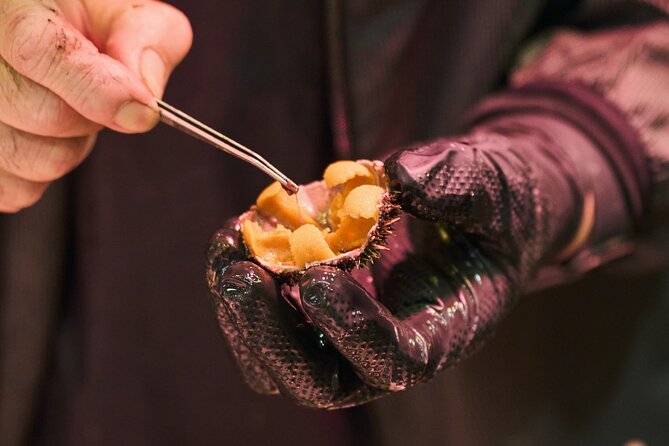
The final major stop is Kuromon Market, often called Osaka’s Kitchen. This is the most direct expression of the city’s food culture on the route. You may see fresh seafood, wagyu beef, fruit, sushi, and other foods prepared for quick eating.
You have about 30 minutes here, which is enough to walk through part of the market and choose something to try. It is not enough to inspect every stall at leisure, especially if the market is busy or you stop to eat. The guide helps you navigate, understand what is available, and make better use of the limited time.
Food purchases are separate from the tour fee, so budget for them. This is where the $31.84 price needs to be judged fairly. You are paying for the guide and the structure of the walk, then choosing how much extra to spend on food. That setup works well if you want control over your budget. It works less well if you expect an all-inclusive tasting menu.
I like the market stop because it turns food into an activity you can shape yourself. You might choose seafood, fruit, sushi, or another item that catches your eye. You do not have to commit to one large meal, and you can ask the guide about foods that are unfamiliar.
The tour does not include dining in, which is important. You are walking, browsing, and eating quick market items rather than sitting down for a relaxed restaurant course. Wear comfortable shoes and arrive ready to keep moving. The market is a place to sample, not a guaranteed lunch or dinner reservation.
What the two-hour pace means
Two hours is short enough to fit into a full Osaka day. You can book it around other plans, and tours are offered at different times of day. Although the experience focuses on nightlife districts and food culture, the available schedule is not limited to one late-night departure.
The pace will be purposeful. The route includes four stops, with about 30 minutes at Dotonbori, 20 minutes at Hozenji Temple, 20 minutes at Doguyasuji, and 30 minutes at Kuromon Market. The listed stop times total about 100 minutes, leaving the rest for walking between locations and meeting the guide.
That structure gives you a useful orientation without taking over your day. I would book it near the start of your Osaka stay if you want restaurant advice you can use afterward. The guide can suggest more places to try, and the route introduces several areas you may want to revisit independently.
If you prefer slow photography, extended shopping, or a full meal, this schedule may feel tight. You will get a broad taste of Namba rather than an unhurried study of each stop.
Price, food costs, and what you receive
At $31.84 per person, the tour is reasonably priced for a two-hour, English-speaking guided walk, especially if you value local direction in a confusing food district. The small-group limit of 15 helps explain the price. You are not paying only for a map route, but for someone who can answer questions and help you make choices along the way.
Still, keep the extra costs in mind. Food and drinks from street vendors are not included, and the tour does not stop for sit-down dining. Your total spending depends on what you buy at Dotonbori and Kuromon Market.
The strongest value comes from the combination of orientation and advice. You see four very different parts of Namba, then leave with ideas for later meals. The tour makes less sense if you only want a cheap meal or a long shopping period, since it is not designed for either purpose.
The booking terms are also straightforward. You receive confirmation at booking, and free cancellation is available if you cancel at least 24 hours before the start time. Within 24 hours, the payment is not refunded, and changes are not accepted.
Who should book this Osaka walking tour?
I would recommend it to first-time visitors who want a quick introduction to Namba, especially people unsure what to eat or how to read the district. It also suits anyone who enjoys markets, small temples, local shopping streets, and short tastings rather than a formal museum-style tour.
Food-focused visitors will get the most from it if they enjoy choosing their own snacks. You can try takoyaki, gyoza, seafood, sushi, fruit, wagyu beef, or other options, but your guide cannot include all of those in the ticket price.
The route may also work well for solo visitors and couples who want company without joining a very large group. The maximum of 15 is not private, but it is more manageable than a mass tour. Ask about your food preferences and restaurant interests, since the guide may be able to tailor advice to your plans.
I would hesitate to recommend it to someone who wants a full meal, a private guide, or a relaxed half-day experience. Two hours goes quickly, and the food stops are flexible purchases rather than a fixed tasting menu.
Practical details before you go
The meeting point is outside Don Quijote Dotonbori Midosuji at 2-chome 5-9 Nishishinsaibashi, Chuo Ward, Osaka. The activity ends back at the same meeting point, so you do not need to plan a separate return route.
The area is near public transportation, which makes it practical to fit into a wider Osaka schedule. Confirmation arrives when you book, and most people can take part. The tour uses a mobile ticket, so keep access to the ticket on your phone.
Bring enough money for optional food and drinks. Since there is no included meal, you can spend very little or add several tastings, but you should decide that before the walk begins. A small group, a clear meeting point, and a two-hour length make this easy to add to a day in Namba.
Should you book it?
Book this tour if you want a guided first look at Osaka’s food culture, not an all-you-can-eat experience. The route gives you a smart mix of Dotonbori’s neon, Hozenji’s quiet temple setting, Doguyasuji’s cooking tools, and Kuromon Market’s food stalls.
The best reason to go is the local direction. Guides such as Kaz, Nako, and Sayaka have helped make the walk personal, practical, and flexible. At $31.84, the price is fair if you plan to use the restaurant advice and return to the area later.
Skip it if you want a long meal, extensive shopping time, or a private tour. For most first visits to Osaka, though, this is a compact way to get your bearings, try a few foods, and learn where to continue exploring after the two hours are over.
FAQ
How long does the Osaka walking tour last?
The tour lasts approximately two hours.
What locations are included?
The route includes the Dotombori Glico Sign, Hozenji Temple, Sennichimae Doguyasuji Shopping Street, and Kuromon Market.
Is food included in the tour price?
No. Food and drinks from street vendors are not included, and the tour does not stop for sit-down dining.
What foods can I try?
You can try street foods such as takoyaki and gyoza. At Kuromon Market, you may also find seafood, wagyu beef, fruit, sushi, and other foods to purchase separately.
Is the tour conducted in English?
Yes. The tour includes an English-speaking guide.
What is the group size?
The maximum group size is 15 people.
Where does the tour start and finish?
The tour starts at Don Quijote Dotonbori Midosuji, 2-chome 5-9 Nishishinsaibashi, Chuo Ward, Osaka. It ends back at the meeting point.
Can I cancel for a full refund?
Yes, if you cancel at least 24 hours before the experience start time. Cancellations within 24 hours are not refunded, and changes within that period are not accepted.
More 2-Hour Experiences in Osaka
- Amsterdam 2 Hour Small-Group Canal Cruise with Dutch Snacks & Bar
★ 5.0 · 1,058 reviews - Amsterdam 2-Hour Evening Cruise With Live Guide and Bar
★ 5.0 · 134 reviews - London: 2-Hour Historic Pub Tour
★ 4.9 · 133 reviews - 2 hour Tiki Pub Sensational Dolphin Sunset Cruise (Adults only)
★ 5.0 · 100 reviews
More Walking Tours Between Bars in Osaka
- Osaka: Izakaya Bars Guided Walking Tour
★ 4.9 · 385 reviews - Osaka Night Walk : Discover Umeda Food and Pub
★ 5.0 · 34 reviews - Madrid Tapas & Wine Tasting Walking Tour – Small Group Local Bars
★ 5.0 · 3,644 reviews - Tokyo: Shinjuku Local Bar and Izakaya Guided Walking Tour
★ 4.9 · 1,794 reviews
Just added around Osaka
- Same Day OK! Osaka: Local Food, Izakaya & Local Bites Tour!★ 4.8 · 17 reviews
- Osaka: Unforgettable Bar Hopping in Kyobashi!★ 5.0 · 4 reviews
- Osaka: Deep Food Tour and Bar Hopping in Namba★ 5.0 · 2 reviews
- Osaka Umeda:PICCADILLY LIVE SHOW & NIGHTCLUB TICKET & Shisha★ 4.7 · 10 reviews
- 3.5h Osaka Night guided Local Bar Hopping, Sake & Karaoke★ 5.0 · 27 reviews
- Osaka Dotonbori:GIRAFFE Nightclub Ticket with Drink/VIP Plan★ 4.4 · 14 reviews
- Osaka Bar Hopping | Explore Hidden Bars & Izakayas in Namba★ 4.7 · 18 reviews
- Deep Osaka Night Life, Eat & Drink★ 5.0 · 17 reviews
Osaka Bar Tours, compared.

![[1 Group Only] Osaka Street Food Tour for Family](https://assets.thebartraveler.com/wp-content/uploads/1-group-only-osaka-street-food-tour-for-family-400x267.jpg)
[1 Group Only] Osaka Street Food Tour for Family
Read our review →
Osaka Local Bar Crawl in Dotombori & Uranamba Area
Read our review →
3Hour Osaka Pub Crawl Bar Hopping Nightlife Guided Tour in Namba
Read our review →
Meet Osaka locals and Japanese speaking experience at Pub Umeda
Read our review →Browse the lists this tour appears in