
REVIEW · TOKYO
Japanese Speaking Experience Meet the locals Friend Cafe Shibuya
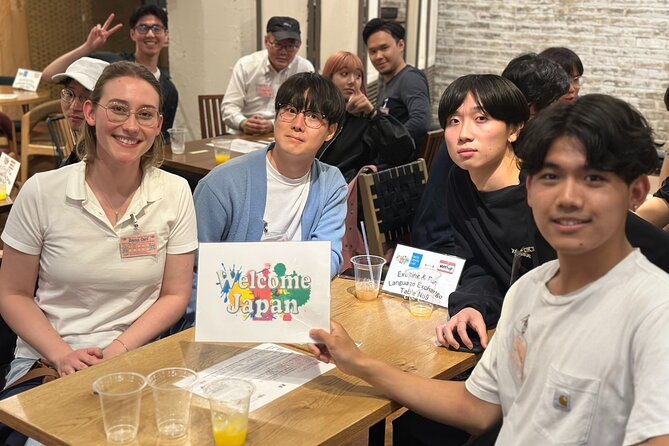
Shibuya’s Friend Cafe turns language practice into a social evening rather than a classroom drill. You sit with a mix of Japanese and international participants, talk for 15 minutes in English, then switch to Japanese, with new seats and new faces throughout the night. Beginners are welcome, so you do not need to arrive with polished Japanese.
I like the small groups of three or four, which make it easier to speak than at a large party. I also like the steady rotation: you get several chances to meet people instead of spending the whole evening with one conversation partner. The main drawback is the pub setting. Bowling noise has made conversation harder at times, and drinks cost extra.
Key points to know before you go
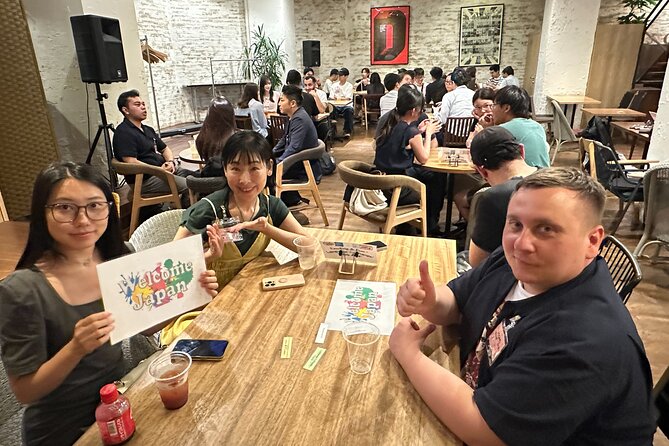
- Six conversation rounds: The evening alternates between English and Japanese, with three rounds in each language.
- New partners every 15 minutes: Seat changes help you speak with several people during the two-hour event.
- Topic cards are provided: They give you an easy starting point when small talk runs dry.
- Japanese beginners can join: You may attend even if your Japanese is very limited.
- A drink is required and costs extra: Food and beverages are not part of the $29 ticket.
- The group is capped at 20 people: That keeps the format more personal than a large mixer.
What this Shibuya language exchange really is
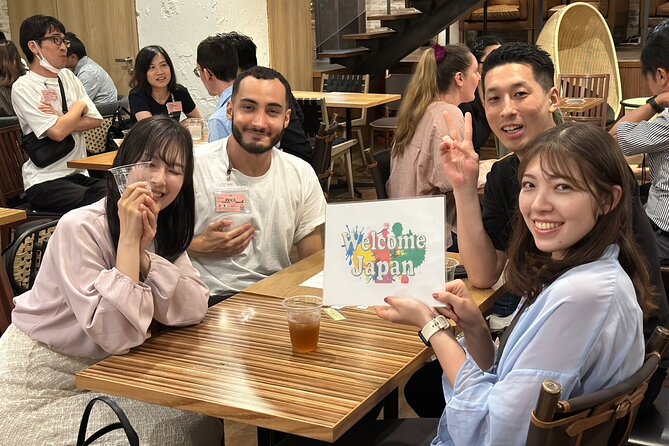
This is not a guided tour of Shibuya, a pub crawl, or a formal Japanese lesson. It is a scheduled social language exchange held at Shibuya Bowling Cafe, with English and Japanese speakers placed in small groups.
That distinction matters. You are paying for a structured way to meet people, not for sightseeing or private instruction. The value comes from the organization: staff arrange the groups, provide topic cards, manage the language changes, and move people around so you have several conversations.
The format suits you if you want to practice speaking but find it awkward to approach strangers in a bar. It also works well if you are in Tokyo alone and want a simple way to meet both local people and international visitors.
You do not need fluent Japanese. The point is to use the language at your level, listen carefully, and keep trying. If you speak English well, you also provide useful practice for Japanese participants who want to improve their English.
Other bars and pubs people book in Tokyo:
- Tokyo Bar Hopping Tour in Shinjuku (All-You-Can-Drink + Dinner)
★ 5.0 · 3,587 reviews - Best of Shinjuku: Izakaya Food Tour (4 Stops, 14+ Tastings)
★ 5.0 · 1,863 reviews - Tokyo: Shinjuku Local Bar and Izakaya Guided Walking Tour
★ 4.9 · 1,794 reviews
Arriving at the underground cafe in Shibuya
The meeting point is Shibuya Bowling Cafe, Shibuya EST, at 1-chōme-14-14 Shibuya. The cafe is on the B1F level, and the activity begins in the evening from 7:30 to 9:30 p.m. on Mondays during the stated operating period.
You check in at reception before joining the exchange. Allow a little patience at the start, since reception begins about 10 minutes before the scheduled opening. After checking in, you buy a drink from the bar. This purchase is required, and the ticket does not cover alcohol, soft drinks, or food.
The location gives the event a casual after-work feel, but it also brings one practical concern: this is a bowling cafe, not a quiet study room. One participant specifically found the bowling noise distracting. If you have trouble hearing in a lively room, sit as close to your group as possible and treat the evening as social practice rather than precise listening training.
The meeting point is near public transportation, and the event ends back there. That makes it easy to continue your night in Shibuya afterward, though the activity itself is the full two-hour commitment.
The first conversation round: English before Japanese
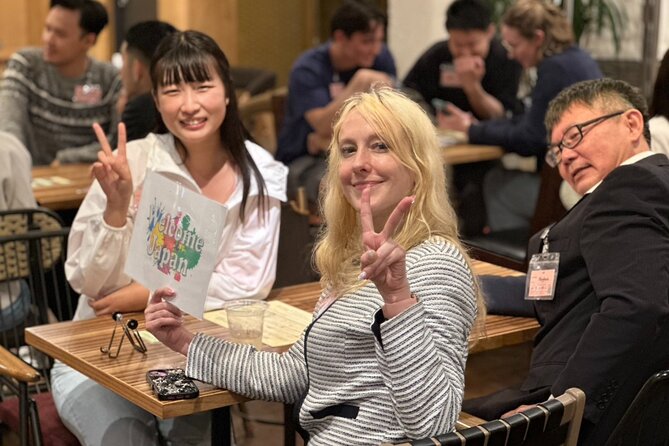
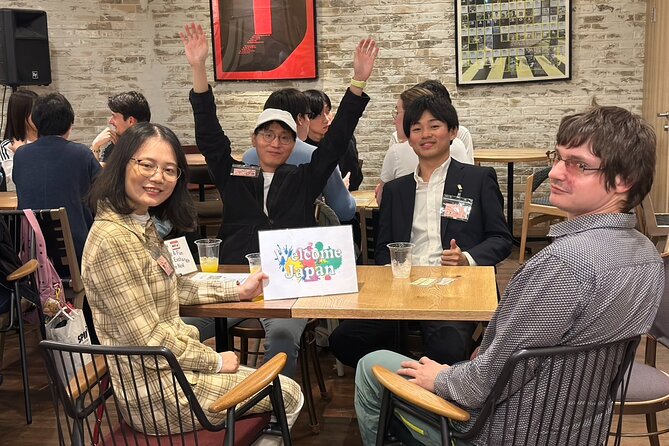
Once check-in is complete, staff place attendees into groups of about three or four people. The groups mix Japanese and foreign participants, creating a practical balance for both languages.
The first formal round is 15 minutes of English conversation. This is useful even if your main goal is Japanese. Speaking English first helps everyone settle in, learn names, and get comfortable with the rhythm of changing partners.
Topic cards are available to help keep the conversation moving. You might use them to talk about food, travel, daily life, hobbies, or other simple subjects, though the exact cards can vary. Their real value is that you do not have to invent a clever opening line every time you sit down.
After the English round, the group switches to 15 minutes of Japanese. For a beginner, this can feel short enough to manage. You can try a few phrases, ask for repetition, and listen to how other people speak. For a stronger student, it gives you a chance to keep the conversation going beyond memorized introductions.
The goal is not perfect grammar. You are there to use what you know in a real exchange, with a person who can respond naturally.
Seat changes keep the evening moving
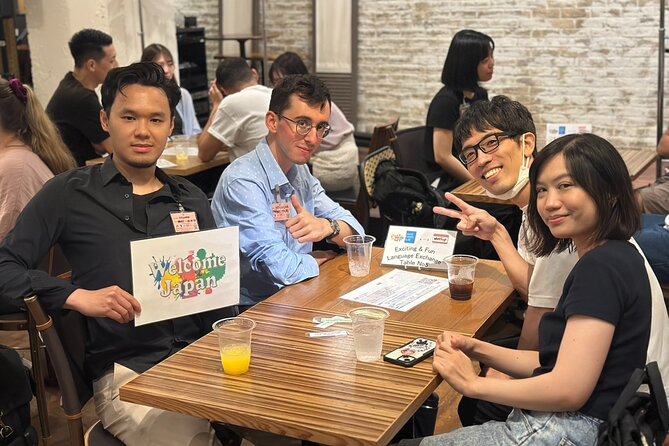
After the first English and Japanese pair, there is a five-minute break and a seat change. Staff then arrange another group, beginning again with English and moving to Japanese.
This rotation is one of the best parts of the format. In an ordinary cafe conversation, you might meet one person and spend the entire night trying to keep things going. Here, the schedule gives you several fresh starts. If one conversation is quiet or difficult, the next change comes soon.
The tradeoff is that the conversations are brief. Fifteen minutes is enough to cover basic subjects, but not enough to build a full friendship every time. You need to be ready to introduce yourself repeatedly and accept that some exchanges will be more natural than others.
That mix is part of the practice. You learn how to explain yourself to different people, adjust your speaking speed, and ask simple follow-up questions. If you are shy, the fixed timing takes some pressure off because you do not have to decide when to leave a conversation.
The group size also helps. Three or four people gives you a chance to speak without forcing you to carry the whole exchange. If one person is more talkative, the others still have room to join in.
Same city, a completely different last round:
- Shibuya Meltdown Nightlife Tour: All-You-Can-Drink Bar Hopping
★ 5.0 · 1,058 reviews - Tokyo: Pub Crawl and Bar Tour
★ 4.5 · 951 reviews - Tokyo: Shinjuku Local Bar & Izakaya Crawl Tour
★ 5.0 · 890 reviews - Tokyo: Shinjuku Bar Hopping with All-You-Can-Drink & Dinner
★ 4.9 · 440 reviews
The final two rounds and closing photo
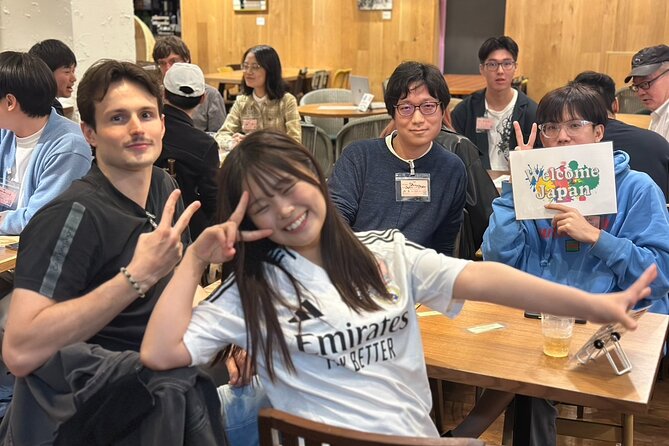
The schedule continues with a third English round and a third Japanese round. Each is separated by another short break and seat change, giving you the chance to talk with more than two or three people during the night.
By the final rounds, you should understand how the event works. You will know the language timing, the seat-change pattern, and the best way to use the topic cards. This is when you can put more energy into Japanese if that is your priority, or help a local participant practice English if you are a fluent speaker.
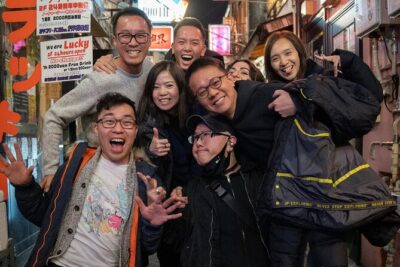
The evening ends with a group photo. It is a small detail, but it gives the event a clear finish rather than letting the gathering fade out one conversation at a time. The activity ends at the original meeting point, so you can leave immediately or make your own plans in Shibuya.
The photo also reflects the nature of the event: this is a social meetup first. You should come ready to talk with a range of people, not expecting a private lesson tailored to your exact Japanese level.
What the $29 price includes
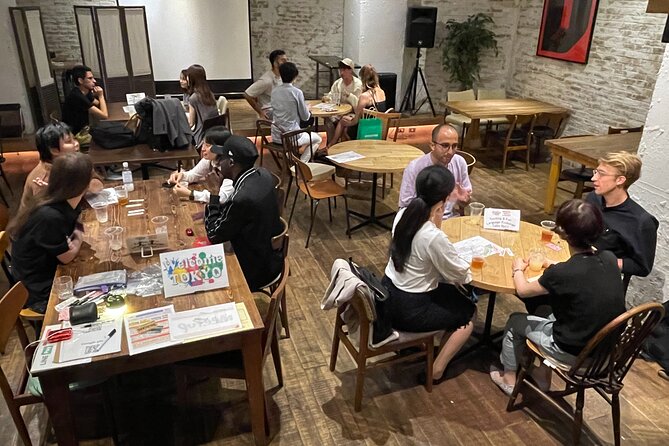
The ticket costs $29 per person and includes the event fees and taxes. It does not include food or drinks, and you are asked to buy at least one drink when you arrive.
For a two-hour activity, the price is fair if you place value on structure and social access. You could sit in a Tokyo bar and hope to meet Japanese speakers for less money, but you would not have the same built-in rotation, topic cards, or staff support. The ticket pays for a managed setting where conversation is the main activity.
It is less attractive if you want a conventional sightseeing experience, a private teacher, or a night centered on food and drink. You will need to budget beyond the ticket for the required beverage, and the pub setting may encourage a louder, less focused atmosphere.
The group maximum is 20 people. That is small enough for the staff to move people around and keep the event organized, while still large enough to offer a mix of ages, backgrounds, and language ability. The actual group size on a particular Monday can vary, but the stated cap limits the scale.
Who will get the most from the evening
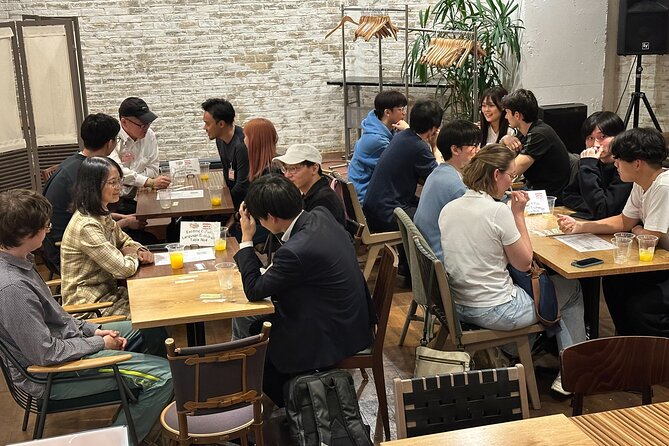
I would choose this experience if you fit one of these descriptions:
- You are studying Japanese and need low-pressure speaking practice.
- You are a beginner who wants a reason to try simple phrases aloud.
- You speak English and would enjoy helping Japanese participants practice.
- You are visiting Tokyo alone and want a planned social activity.
- You want an easy start to a larger night out in Shibuya.
- You prefer guided interaction to approaching people at random.
It is also useful for people who enjoy meeting others from several countries. The setup includes locals and international participants, so the conversation is not limited to one nationality or one type of Japanese practice.
I would think twice if you dislike noisy venues, must have long one-to-one conversations, or want detailed correction of your Japanese. The event gives you speaking time, but it is not described as a grammar course or a private language session.
You should also be comfortable attending a pub-based event, since it is restricted to people aged 18 and over. The age rule is tied to the venue, and drinks are part of the setting even though they are not included in the ticket.
Practical ways to make the exchange better
Arrive with a short self-introduction ready in both languages. Include your name, where you are from, why you are in Tokyo, and one interest. That gives you a reliable starting point when each new group begins.
Use the topic cards, but do not feel bound by them. Once you find a shared interest, let the conversation move naturally. The cards are most helpful when nobody knows how to begin, not when you already have something useful to discuss.
During the Japanese rounds, set a small goal. You might try to ask three questions, use one new phrase, or speak for a full minute without switching to English. A modest target is more useful than trying to sound advanced.
During the English rounds, give your Japanese conversation partners room to speak. Use clear sentences, avoid racing through slang, and rephrase rather than simply repeating the same sentence. That makes the exchange more balanced and gives both sides a real chance to practice.
Bring a mobile ticket and enough money for the drink purchase. The ticket is mobile, and confirmation is provided at booking. Since the event is on Monday evening, check your timing carefully if you are arranging dinner or another reservation afterward.
How the atmosphere may affect your experience
The event is designed to feel friendly rather than intimidating. The short rounds, topic cards, and staff-led seating changes give you a clear role from the moment you arrive.
Still, the mood depends partly on the room and the group. Some evenings may feel lively and easy, while others may include quieter conversations or uneven language levels. That is normal for a public exchange, and the seat changes give you a chance to find a better fit later.
The most praised elements are the organization, friendly atmosphere, and ease of meeting new people. One participant described the activities as simple and comfortable, while another appreciated the way the organizer helped people talk more. Those details point to the event’s main strength: you are not left alone to make the evening work.
The noise is the clearest concern. Bowling activity can compete with conversation, especially when several people are speaking at once. If you need a quiet environment to understand Japanese, this may not be your ideal practice setting.
Cancellation and final booking details
You can cancel for a full refund up to 24 hours before the local start time. Cancellations or changes made inside that 24-hour window are not refunded or accepted.
The activity is near public transportation, most people can participate, and the maximum group size is 20. It begins and ends at the Shibuya Bowling Cafe location, with the cafe on B1F.
The event is offered on Mondays from 7:30 to 9:30 p.m. during the listed operating dates. Check the selected date carefully before booking, especially if you are building a tight Tokyo schedule.
Should you book Friend Cafe Shibuya?
Book it if you want structured conversation, several new partners, and a friendly way to test your Japanese. The two-hour format gives you more useful practice than a single casual meeting, and beginners can take part without pretending to be fluent.
Skip it if you want quiet study conditions, included drinks, or a formal lesson with individual correction. The required drink is extra, the bowling cafe can be noisy, and the 15-minute rotations favor variety over long conversations.
For $29, this is a practical social activity rather than a major Tokyo attraction. If you approach it with that expectation, it can be a good use of a Monday evening and an easy way to meet people before continuing into Shibuya’s night.
FAQ
Where does the Japanese speaking experience take place?
It takes place at Shibuya Bowling Cafe, Shibuya EST, 1-chōme-14-14 Shibuya, Tokyo 150-0002, Japan. The cafe is on B1F.
How long does the activity last?
The experience lasts approximately two hours, from 7:30 to 9:30 p.m.
On which day is the activity offered?
The stated opening schedule is Monday from 7:30 p.m. to 9:30 p.m.
Do I need to speak Japanese fluently?
No. Japanese beginners are welcome, and the event is intended for people with different language levels.
How are the conversation groups arranged?
Staff place attendees into small groups of about three or four people, mixing Japanese and foreign participants.
How often do I change conversation partners?
Staff change seats after the conversation rounds so you can speak with several different people, generally more than two or three during the event.
How are the languages divided?
The schedule alternates between 15 minutes of English and 15 minutes of Japanese. There are three English rounds and three Japanese rounds.
Are food and drinks included in the ticket?
No. Food and drinks are not included. You must buy at least one drink at the bar when you arrive.
Can I cancel for a refund?
Yes. You can cancel up to 24 hours before the experience start time for a full refund. Cancellations or changes made less than 24 hours in advance are not refunded or accepted.
Just added around Tokyo
- Tokyo: The Best Izakaya Tour in Shibuya★ 4.7 · 15 reviews
- Tokyo: Shinjuku Nightlife Tour with Karaoke and Bar Hopping★ 4.1 · 4 reviews
- Tokyo:Shinjuku Ni-chome LGBTQ+ Bar Hopping Tour with Guide★ 5.0 · 2 reviews
- Tokyo: Shinjuku Golden Gai Bar Hopping that only locals know★ 5.0 · 5 reviews
- Tokyo: Shinjuku Hidden Japanese Bar Tour (Neon Light City)★ 5.0 · 4 reviews
- Tokyo: Shinjuku Bar Hopping & Karaoke Night Tour★ 4.9 · 19 reviews
- Tokyo: Shinjuku Golden Gai Bar Hopping Night Tour★ 4.4 · 8 reviews
- Tokyo Pub Crawl: Unique Japanese Drinks in Shimokitazawa★ 5.0 · 7 reviews
Tokyo Bar Tours, compared.
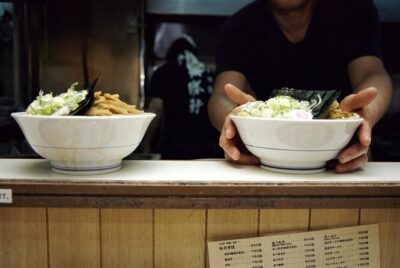
Tokyo Bar Hopping Tour in Shinjuku (All-You-Can-Drink + Dinner)
Read our review →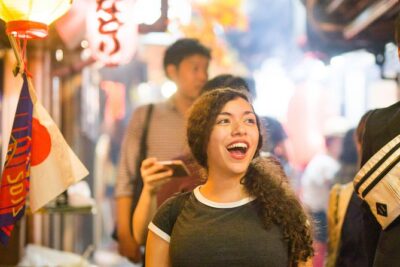
Best of Shinjuku: Izakaya Food Tour (4 Stops, 14+ Tastings)
Read our review →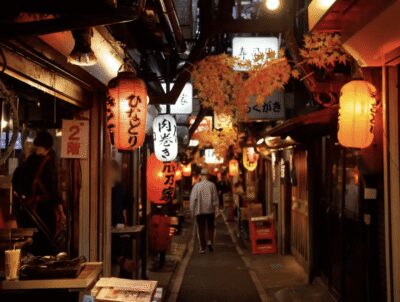
Shinjuku Local Bar and Izakaya Guided Walking Tour
Read our review →
Shinjuku Bar Hopping with All-You-Can-Drink & Dinner
Read our review →
Shinjuku Nightlife & Secret Backstreets Walking Tour
Read our review →Browse the lists this tour appears in