
REVIEW · DUBLIN
Real Dublin Traditional Music Pub Tour
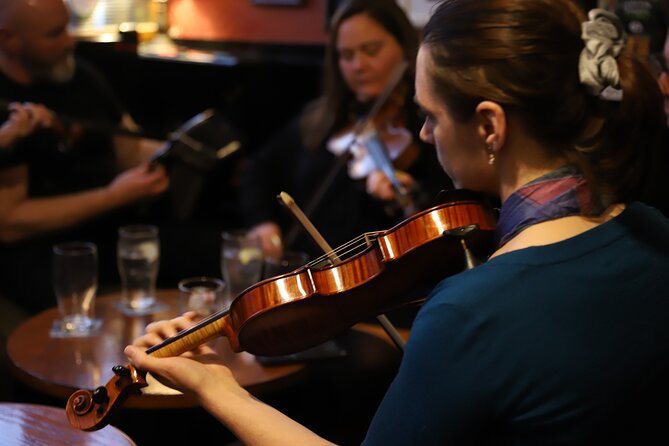
The best part of this Dublin night out is the music itself. A local musician leads you to three genuine pub sessions, including lesser-known spots you may not find by searching online, while explaining the instruments, songs, and stories behind Irish traditional music. You are not simply taken to a bar and left to order a pint.
I like the small group size, capped at 10, and the way the evening creates easy conversation among people who may have arrived in Dublin alone or as couples. I also like the route’s variety: one pub may be packed and powerful, another more intimate, and a third may offer a quiet song that stops the room.
The main drawback is the walking. You cross central Dublin between pubs, often at night, so good shoes and suitable clothing matter. This is also not a show with a fixed cast. The musicians, songs, and exact final pub can change, which is part of the appeal but means no two evenings are identical.
Key points to know before booking
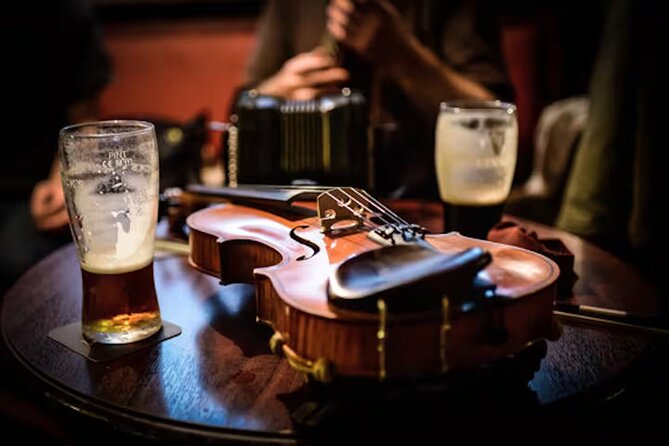
- Three pubs and three drinks: Your price of $76.89 includes a drink at each stop, along with the guided music experience.
- Local musician guides: Neil, Neal, Niall, Ciarán, and Seán are among the guides associated with the tour, and several also perform.
- Small groups: The maximum is 10 people, making it easier to hear explanations and meet your fellow pub-goers.
- Music beyond Temple Bar: The route focuses on real Dublin music pubs, including tucked-away places that are easy to miss.
- Lots of walking: The tour runs about three hours and moves across the city between venues.
- Different kinds of Irish music: You learn about jigs, reels, traditional instruments, songs, and the role of music in Irish culture.
Why this is more than a Dublin pub crawl
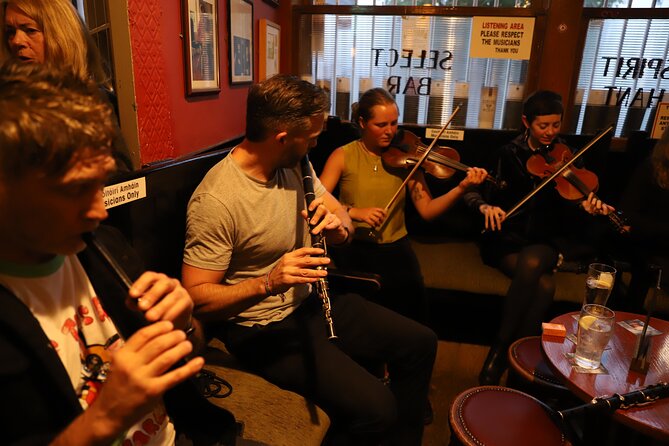
A standard pub crawl is built around moving from one drink to the next. This experience uses the pubs as a doorway into Irish music. Your guide explains what you are hearing, introduces the sound of instruments such as the fiddle, tin whistle, mandolin, button accordion, and uilleann pipes, and helps you listen for differences that might otherwise pass you by.
That context makes a real difference. After learning the difference between a jig and a reel, you can hear how the rhythm changes. After hearing about the way Irish music was carried through difficult periods, you understand why a session in a small pub can feel like more than background entertainment.
I like that the guide is a working musician rather than only a city guide. Neil, Ciarán, Niall, and Seán are praised for mixing history with humor and personal stories. Some guides have also performed during the evening, giving you a direct connection to the music instead of a lecture about it.
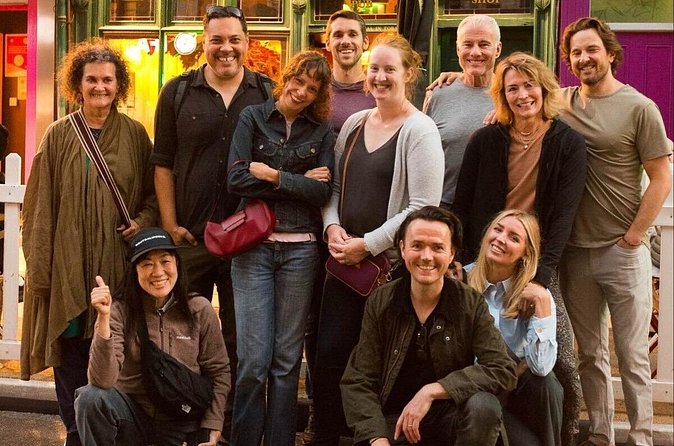
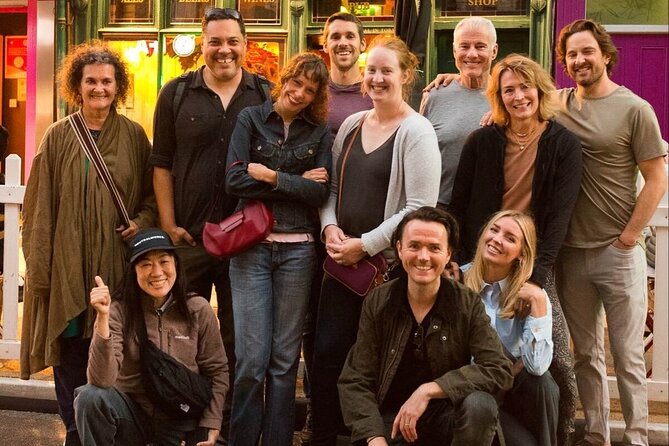
The group is small enough for this to feel social without becoming forced. A short icebreaker helps people talk early, and the evening often develops into a shared night out. That is especially useful if you are traveling alone, arriving in Dublin at the start of your trip, or hoping to meet people without joining a loud party crawl.
More Historic Pub Tours in Dublin
- Dublin Out-Off-Tourist-Path Pub Tour and Tastings with a Local
★ 5.0 · 361 reviews - Dublin: Traditional Pub Walking Tour
★ 4.6 · 295 reviews - Afternoon Dublin Mountain Pub Tour(small group pub crawl max 15)
★ 5.0 · 259 reviews
Meeting at Smithfield and setting the tone
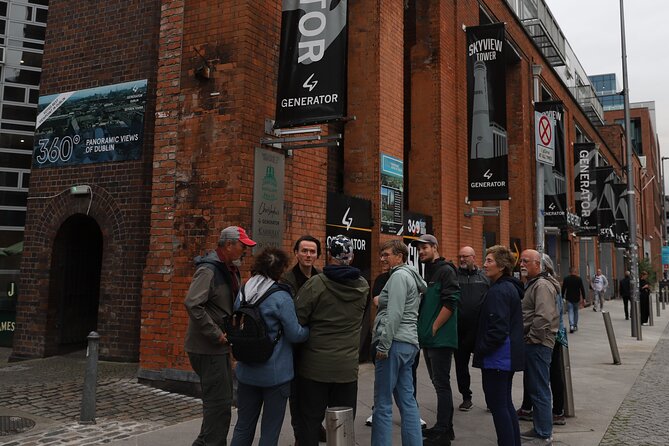
The starting point is the Skyview Tower, also called the Chimney Viewing Tower, at Arran Quay in Smithfield. Check the exact meeting instructions carefully, since the tower is a landmark rather than a pub entrance and you do not want to begin the night by circling the wrong block.
Smithfield is a useful starting area because it is away from the most concentrated Temple Bar crowds. From here, your guide sets expectations, introduces the group, and begins the walk toward the first session. The evening lasts about three hours, but the pace is shaped by the music and the walk between venues.
The route is not designed for people with mobility problems. You should expect a substantial amount of walking across Dublin and be comfortable standing in pubs. Wear shoes that can handle pavement and clothing suited to an Irish evening, especially if the weather is damp or cool.
The tour is offered in English. Evening departures are not suitable for children, and children are not allowed on evening tours. The afternoon tour is the option mentioned for children, though the experience is still best suited to people interested in listening, walking, and learning about music rather than simply having drinks.
First stop: the power of a full Dublin session
The first pub gives you the clearest sense of why this tour works. One reported route began at the Cobblestone, a well-known Smithfield music pub, where a large group of musicians filled the room with traditional sound. Another route may use a different venue, since the exact sessions and pubs can vary.
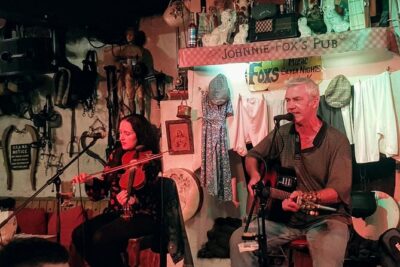
At a strong first stop, you might hear several instruments working together while conversation continues around the edges of the room. That is normal in Irish pub music. A traditional session is not always a silent concert. It can be social, informal, and wonderfully loud, with the music flowing through the room rather than sitting apart from it.
Your guide helps you notice what is happening. You may learn how musicians pass tunes between one another, how different instruments fill different roles, and why the session feels less staged than a set performance. You also have time for your first drink, one of three included during the evening.
The Cobblestone example was described as crowded, with a large band and a strong sense of musical energy. That can be thrilling, but it also points to a practical trade-off: a packed pub may give you the best atmosphere while making it harder to find a seat or hear every word from your guide. If you need a quiet room, this will not always be the most comfortable part of the evening.
Second stop: learning to hear a jig from a reel
The second pub is where the music lesson becomes practical. Your guide explains the difference between a jig and a reel, then lets you hear the rhythms in a live setting rather than from a recording or textbook.
You do not need musical training. The point is simply to listen to the pulse and notice how the tune moves. Once the difference is explained, the music becomes easier to follow, and you may start identifying the rhythm when you hear Irish music elsewhere in the country.
One route included Piper’s Corner, described as a more intimate pub where fiddlers played jigs and the music drew people inside from the street. That smaller setting can offer a better view of the musicians and a closer feel for the session.
The atmosphere can change quickly. A pub may become full while you are there, especially if the music is strong. The group may then move on to keep the route going. This is not a flaw so much as a reminder that the tour follows live music, not a fixed theater schedule.
Your second drink is included here. You can use the stop to ask questions, compare the instruments you have heard, and chat with the other people in your group. The best approach is to balance conversation with listening. The music is the reason to be there.
More Historic Pub Tours in Ireland
- Dublin & Wicklow Mountain Pub Tour small group tour max 15 people
★ 5.0 · 240 reviews - Dublin Mountain Pub Tour ( small group Pub Crawl max 15 people)
★ 5.0 · 163 reviews - The Perfect Pint Pub Tour
★ 5.0 · 144 reviews - Dublin: Traditional Pubs Walking Tour with Local Guide
★ 4.9 · 112 reviews
Final stop: quieter songs and a personal finish
The last pub often provides the evening’s emotional change of pace. After the first session’s force and the second stop’s rhythmic lesson, the final venue may feel less obvious, more intimate, or simply different in character.
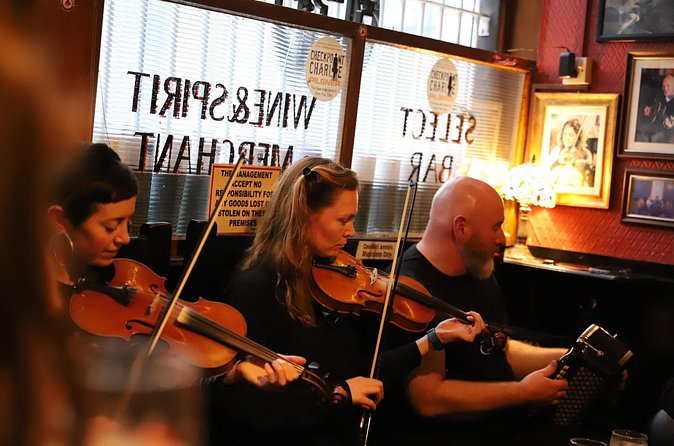
One route ended at McNeill’s Pub, an unassuming place where a six-piece group played with striking control. A softly sung love song reportedly brought conversation to a halt, showing another side of Irish music. Traditional music is not only fast tunes and lively fiddles. It also includes songs that carry sadness, memory, humor, and longing.
This kind of moment is why I would not judge the tour only by the number of pubs. Three stops give you a useful range, but the real value lies in the contrast between them. You may hear a loud ensemble at one pub, a close fiddle session at another, and a singer holding the room with little more than a voice and guitar at the last.
Some guides, including Ciarán and Seán, have musical backgrounds and may perform during the evening. You should not book expecting a private concert from the guide, but an impromptu song can make the final stop feel personal. Your third included drink arrives here, giving the group a natural chance to wind down and exchange recommendations.
The end point is on Capel Street, though the final pub can sometimes change. If you need the precise ending location after booking, ask the operator directly. That is useful if you have a late reservation, a hotel far from the center, or plans that depend on a particular finish time.
The history gives the songs more weight
The music lessons are not isolated facts. The guides connect traditional Irish music with Irish identity, cultural survival, independence, and later popular music. You may hear about artists such as Luke Kelly, The Chieftains, and The Pogues, along with the way younger musicians continue to learn older instruments and tunes.
This background helps you understand why the pub is such a natural home for the music. The session is not a museum display. It is a living practice, passed between generations and adapted by current players.
I especially value the link between the old instruments and the modern city. The uilleann pipes, button accordion, tin whistle, fiddle, and mandolin can sound unfamiliar at first, yet the music often feels immediately welcoming. Your guide gives you enough information to listen with greater attention without turning the night into a formal class.
The strongest guides keep this balance well. They share history, then let the musicians take over. You get useful context, but you are not trapped in a long speech while a session is happening nearby.
What the $76.89 price really covers
At $76.89 per person, this is not the cheapest way to spend an evening in Dublin. You could enter a pub on your own and buy three drinks for much less. The price makes more sense if you want access, structure, and local guidance rather than simply a night at the bar.
You are paying for a small group, a musician guide, three drink stops, background on Irish music, and a route built around live sessions. The guide also solves a common Dublin problem: knowing which pub has worthwhile music on a particular night and finding the less obvious venues.
The value is strongest for a first visit. You can use the evening as an introduction to the city’s music culture, then return to a favorite pub later in your trip. Several stops are the sort of places you might want to revisit once you know where they are.
The value is lower if you dislike walking, do not drink, or prefer a polished concert with guaranteed seating and a fixed program. The tour includes drinks, but it is not presented as a food tour, and there is no promise of a particular band, song, or final pub.
Who will enjoy this Dublin evening
I would recommend this to you if you like live music, local bars, cultural background, and small-group experiences. It works especially well for solo visitors, couples, honeymooners, and first-time Dublin visitors who want something more personal than a major sightseeing attraction.
It also suits people who are curious about Irish music but do not know the difference between a jig and a reel. You do not need to play an instrument or have a long list of traditional songs in your head. The guide supplies the framework, and the musicians supply the sound.
The tour is less suited to anyone with mobility issues or anyone who wants a quiet, seated evening. You will walk between pubs, stand in lively rooms, and deal with the normal unpredictability of live music venues. The lack of a fixed route can be exciting, but it can also frustrate someone who wants every detail confirmed in advance.
The maximum group size is 10, which keeps the experience manageable. It also means availability can be limited, so booking well ahead is sensible. The activity is booked an average of 58 days in advance, a useful sign that you should not assume you can always find a place at the last minute.
Free cancellation is available up to 24 hours before the start time for a full refund. Within 24 hours, changes and cancellations are not accepted for a refund. The tour also requires a minimum number of people, so if the operator cancels for that reason, you are offered another date or experience, or a full refund.
Should you book the Real Dublin Traditional Music Pub Tour?
Book it if you want to hear traditional Irish music where it is actually played, meet a few friendly people, and learn enough to listen with new ears. The combination of three pubs, three drinks, a musician guide, and a small group gives you more than a basic night out.
I would choose this for an early evening in Dublin, especially on the first or second night of a visit. You get local suggestions for the rest of your trip, learn which venues appeal to you, and avoid spending your first music night only in the most tourist-focused areas.
Skip it if long walks are difficult, you need a guaranteed schedule, or you are mainly interested in famous landmarks. But if the thought of a fiddle session, a low pub ceiling, a good song, and a guide explaining why a reel is not a jig sounds appealing, this is a strong use of three hours in Dublin.
FAQ
How long does the Real Dublin Traditional Music Pub Tour last?
The tour lasts approximately three hours.
How many pubs does the tour visit?
You visit three live music pubs during the evening.
Are drinks included?
Yes. The experience includes three drinks, with one drink enjoyed at each pub stop.
Where does the tour start?
It starts at the Skyview Tower, also called the Chimney Viewing Tower, at Arran Quay in Smithfield, Dublin.
Where does the tour finish?
The listed end point is Capel Street in Dublin. The final pub and exact end point can sometimes change, so you can ask for confirmation after booking.
Is the tour suitable for children?
Children are not allowed on the evening tour. The experience is not suitable for children except on the afternoon tour.
Is the tour suitable for people with mobility issues?
No. There is lots of walking between pubs, so it is not suitable for anyone with mobility issues. A moderate level of physical fitness is recommended.
What language is the tour offered in?
The tour is offered in English.
How many people can join the tour?
The maximum group size is 10 people.
Just added around Dublin
- Dublin Private Custom Tour, Off-The-Beaten-Path in Temple Bar with a Local★ 4.5 · 6 reviews
- The True Dublin Experience: Private Irish Pub Culture Tour★ 5.0 · 3 reviews
- Dublin Self-Guided Murder Mystery Tour by Temple Bar★ 3.5 · 12 reviews
- Classic Irish Pubs Private Tour of Dublin: Live Music, Beer and Nightlife★ 4.5 · 20 reviews
- Private Dublin Pub Odyssey: Storytelling, and Pub Culture★ 5.0 · 21 reviews
- Dublin: Private Pub Tour★ 5.0 · 3 reviews
- Dublin: Pub Tour. Pour The Perfect Guinness, Whiskey & Music★ 5.0 · 3 reviews
- Dublin: Guided Irish Musical Pub Tour★ 5.0 · 2 reviews
Dublin Bar Tours, compared.

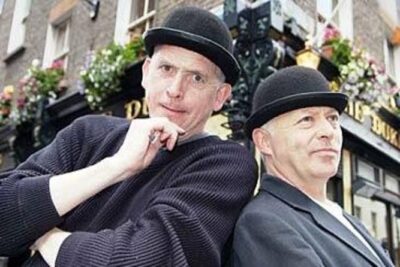
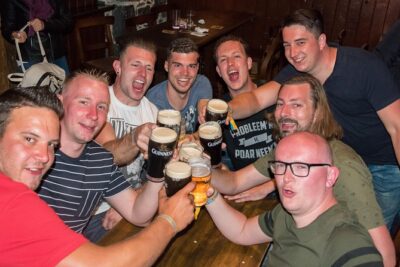
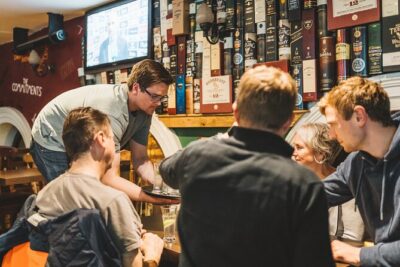
Dublin Out-Off-Tourist-Path Pub Tour and Tastings with a Local
Read our review →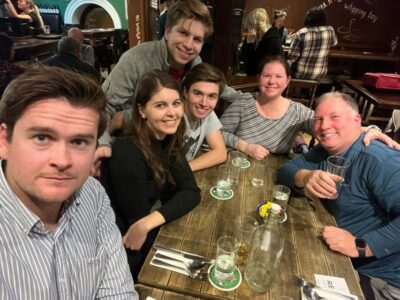
Afternoon Dublin Mountain Pub Tour(small group pub crawl max 15)
Read our review →
Dublin & Wicklow Mountain Pub Tour small group tour max 15 people
Read our review →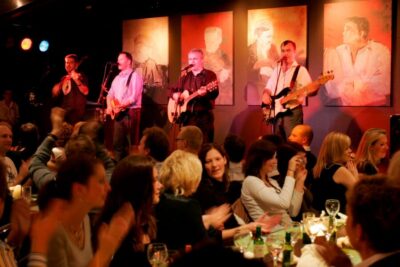
Browse the lists this tour appears in