
REVIEW · TOKYO
Tokyo: Learn the Art of Chopsticks in a Cozy Izakaya!
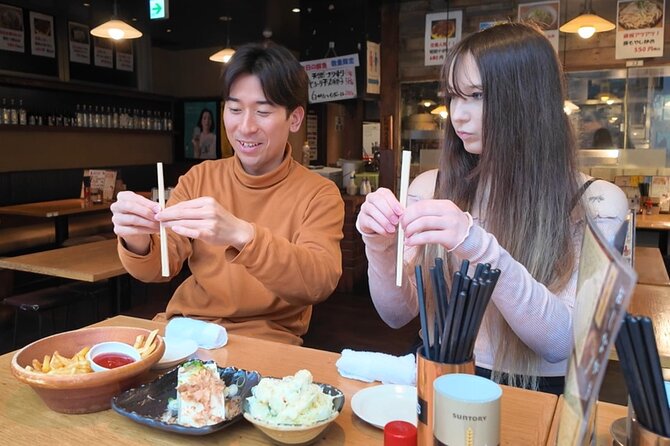
Tokyo’s chopstick workshop turns a small dining habit into a hands-on cultural lesson. You’ll practice picking up beans, learn how Japanese diners handle food with control, and test your new skills in a friendly mini competition before sitting down to light izakaya fare.
I like the small group size of nine, which gives the English-speaking guides room to help with your grip. I also like the useful souvenir: you take home the chopsticks you used. The main consideration is time. At about one hour, this is a quick introduction, not a full cooking class or long meal.
Key points at a glance
- Bean-grabbing practice: Start with a simple challenge that quickly shows how much control chopsticks require.
- Japanese dining skills: Learn to use chopsticks for more than picking up sushi, including the careful handling of everyday food.
- Friendly instruction: Guides such as Taka, Shu, and Hanako focus on helping you improve while keeping the tone relaxed.
- Izakaya food and one drink: Expect a light meal with Japanese favorites such as gyoza, karaage, and tofu.
- Small group setting: The experience accepts a maximum of nine people, making personal help more likely.
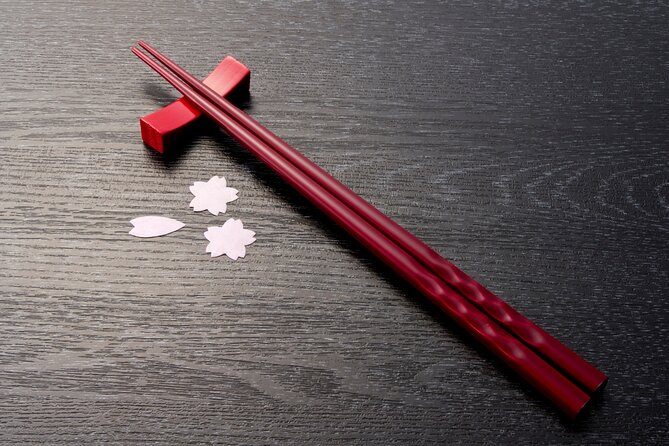
- Take-home souvenir: Your used chopsticks become a practical reminder of the lesson.
A one-hour lesson that makes chopsticks less mysterious
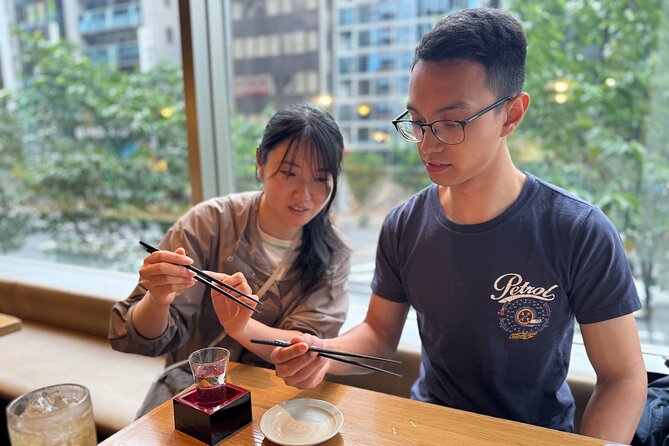
Chopsticks can look simple until you try to use them for something small, slippery, or soft. This workshop gives you a reason to slow down and pay attention to the grip, angle, and movement of each stick.
That makes the experience useful beyond the hour itself. You are not only learning how to lift one piece of food. You are getting a better feel for a basic part of Japanese table manners and daily life.
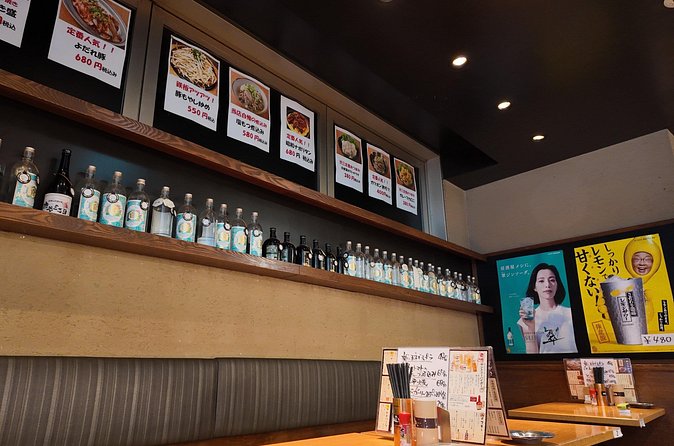
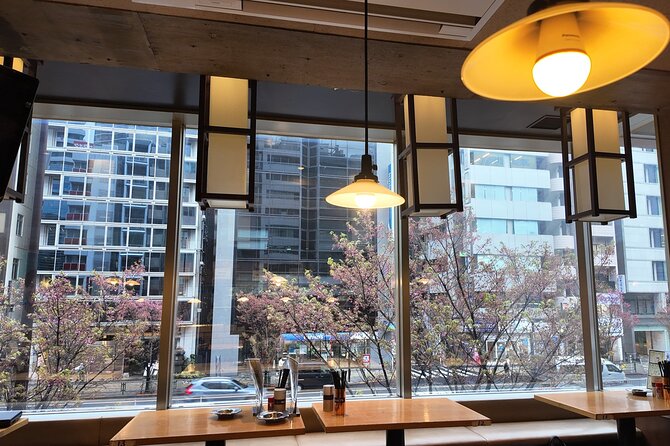
The setting matters, too. This is held in a casual izakaya, a Japanese-style bar where food and drinks are served in a relaxed social setting. It is not presented as a formal classroom. You learn at a table, practice with other people, and finish with snacks and a drink.
The short format suits a packed Tokyo schedule. It begins at 4:30 pm, a handy point between daytime sightseeing and an evening meal. You can use it as a light break after walking around Shibuya, though the meeting point is outside the izakaya at a FamilyMart on 3-chōme-17-2 in Shibuya.
More Izakaya Bar Hopping in Tokyo
- Best of Shinjuku: Izakaya Food Tour (4 Stops, 14+ Tastings)
★ 5.0 · 1,863 reviews - Tokyo: Shinjuku Local Bar and Izakaya Guided Walking Tour
★ 4.9 · 1,794 reviews - Tokyo: Shinjuku Local Bar & Izakaya Crawl Tour
★ 5.0 · 890 reviews
Starting with beans in Shibuya
The first activity is a bean-grabbing tryout. This is a smart opening because it gives you an immediate test without requiring any prior skill. Beans are small enough to expose a shaky grip, but the exercise remains playful rather than intimidating.
You may find that your usual chopstick habit is less effective than expected. Many people pinch too hard, hold the sticks too far down, or move both sticks instead of keeping one steady. The practice gives the guides a clear chance to correct those habits before the food arrives.
I like this kind of opening because it gets everyone involved at once. You do not spend the first part listening to a long explanation. You pick up the chopsticks and try.
The bean activity also helps set expectations. This is not a solemn lesson in etiquette. You are meant to experiment, make mistakes, and improve.
Learning the grip Japanese diners use
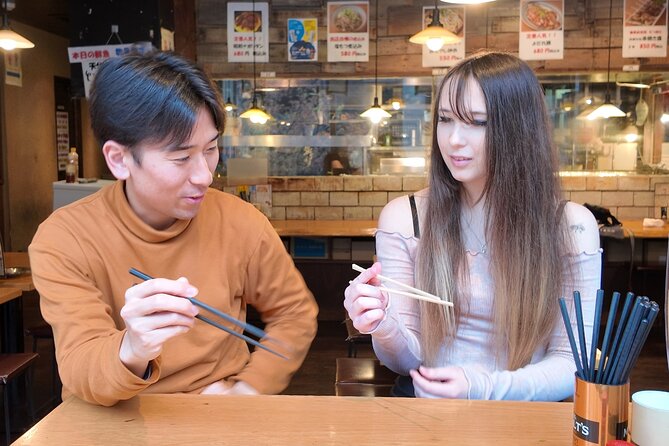
After the tryout comes the main chopsticks lesson. The focus is on handling chopsticks as an extension of the hand, rather than simply holding two narrow sticks between your fingers.
The description of the activity makes an important point: in Japan, chopsticks are used for a wide range of food and can even help with cooking. That broad use explains why technique matters. A good grip should give you enough control for delicate bites as well as more substantial pieces.
The English-speaking guide leads the instruction, so you can ask questions without guessing at gestures or copying the person beside you. The group limit of nine is another advantage. If your grip needs adjustment, there is a reasonable chance the guide can notice and offer help.
Taka and Shu are named as guides who helped participants become more capable with chopsticks. Taka and Hanako are also named as hosts who combined instruction with a pleasant meal. You might not meet all three at every session, but their role shows the experience is built around active coaching rather than a quick demonstration.
The lesson should be especially helpful if you are visiting Japan for the first time and want to feel more comfortable at restaurants. It can also suit anyone who already uses chopsticks but wants better control. Do not expect advanced culinary training, though. The activity teaches dining technique, not a full set of cooking skills.
The mini competition adds a useful bit of pressure
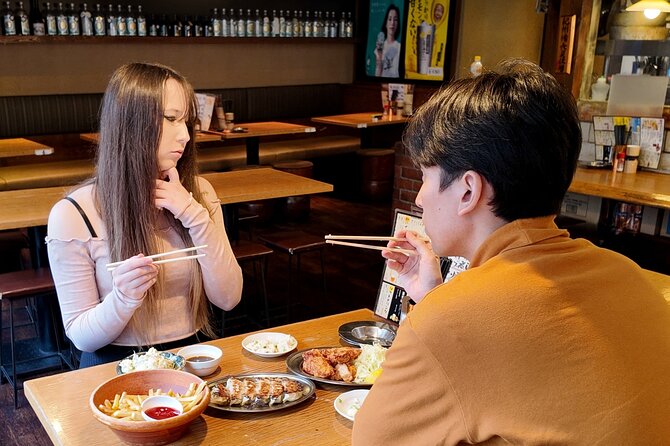
Once you have practiced, the session moves to a mini competition. This is more than a novelty. A little pressure reveals whether your new grip works when you stop thinking about every finger.
The contest gives the lesson a clear payoff. You have tried the technique, received guidance, and now get to use it in a playful test. The competitive part is likely to appeal to families, couples, and small groups of friends, while solo participants can join the same activity without needing to organize anything themselves.
I would treat the competition as a lighthearted challenge, not a serious contest. The supplied details do not specify the exact rules, prize, or item being moved. What is clear is that it forms part of the learning sequence and keeps the hour from feeling like a passive demonstration.
If you are nervous about making mistakes in front of others, remember that the group is limited and the tone is casual. You are there to learn. The competition is a way to practice, not a test of your worth at the dinner table.
Same city, a completely different last round:
- Tokyo Bar Hopping Tour in Shinjuku (All-You-Can-Drink + Dinner)
★ 5.0 · 3,587 reviews - Shibuya Meltdown Nightlife Tour: All-You-Can-Drink Bar Hopping
★ 5.0 · 1,058 reviews - Tokyo: Pub Crawl and Bar Tour
★ 4.5 · 951 reviews - Japanese Speaking Experience Meet the locals Friend Cafe Shibuya
★ 5.0 · 518 reviews
Kampai, gyoza, karaage, and tofu
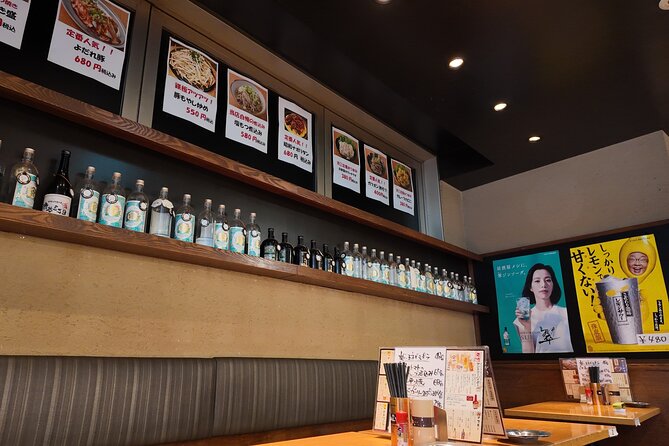
The final part combines a kampai, or Japanese toast, with snack time. The price includes one drink and a light meal. Food named in the available details includes gyoza, karaage, and tofu.
That menu makes the food portion more appealing than a token snack. Gyoza gives you a filled bite to handle, karaage offers a crisp piece of food, and tofu requires a gentler touch. Together, they provide different textures for your new technique.
One meal description specifically praised the gyoza, karaage, and tofu. I would keep your expectations in the right range, however. This is a light meal, not a full izakaya dinner. If you arrive very hungry, you may want to plan another meal afterward.
The drink is included, but additional food and drinks are not. That is worth remembering when comparing the price with a regular restaurant visit. The experience gives you instruction, a social setting, a meal, and a souvenir. It does not cover an open-ended evening of eating and drinking.
The timing works well for a pre-dinner activity. Finish the workshop, then continue exploring Shibuya or find a restaurant for a larger meal. Since the activity ends back at the meeting point, you are not left trying to locate a distant exit or separate end point.
What the $22.89 price really covers
At $22.89 per person, this experience is priced above the cost of simply ordering a light snack in Tokyo. The difference is the lesson and the guided activity. You are paying for an English-speaking host, structured practice, one drink, food, a small group, and the chopsticks you take home.
That is fair value if you want an activity with a cultural focus rather than another sightseeing stop. You are also getting a souvenir that is tied directly to what you learned, not a generic item picked up in a shop.
The value is weaker if you only want a substantial meal. The food is described as light, and extra drinks and food cost more. You could eat more cheaply elsewhere, but you would not receive the instruction, competition, or guided introduction to chopstick technique.
The one-hour duration keeps the total cost and time commitment manageable. You can fit it into a day of sightseeing without giving up half an afternoon. At the same time, the short length means the lesson cannot cover every part of Japanese dining etiquette.
Who will get the most from this experience
I would recommend this for first-time visitors who want a simple way to connect with Japanese daily culture. It works particularly well for people who enjoy learning by doing rather than listening to a lecture.
It is also a good choice for:
- Families and couples: The bean challenge and mini competition give you something to do together.
- Solo visitors: The small group and shared meal create a natural social setting.
- Food-focused visitors: You get to handle familiar Japanese dishes while learning how chopsticks work.
- People with limited time: The one-hour format leaves room for other plans.
- Anyone uneasy with chopsticks: The lesson gives you practical help before your next restaurant meal.
You may want to skip it if you are looking for a full cooking class, a long dinner, or an elaborate cultural ceremony. The experience is casual and compact. Its strength is the mix of useful practice and light social fun.
Practical details before you book
Meet at the FamilyMart at 3-chōme-17-2 in Shibuya, Tokyo 150-0002. The start time is 4:30 pm, and the activity returns to the same meeting point when it ends.
The tour is near public transportation, but the provided details do not name a station or give walking directions. I would allow extra time to find the FamilyMart, especially if you are arriving from another part of Tokyo. A mobile ticket is provided, which is convenient for a phone-based booking.
The maximum group size is nine. That is small enough to feel more personal than a large food tour, though the actual number on your date can be lower.
Free cancellation is available if you cancel at least 24 hours before the 4:30 pm start time. Cancellations made less than 24 hours in advance are not refunded, and changes inside that period are not accepted. Confirmation normally arrives at booking, but a reservation made within one day of the activity is confirmed as soon as possible, subject to availability.
The best way to approach the hour
Arrive ready to handle food and make mistakes. The activity is more enjoyable if you treat the first bean challenge as practice instead of trying to look polished from the beginning.
Do not skip the lesson just because you already use chopsticks. The point is not only picking up food. It is gaining control and learning why certain motions work better.
Keep the meal in perspective. You will receive a light serving and one drink, so plan your evening around it rather than treating it as your only meal. If the named menu items are served, gyoza, karaage, and tofu should give you a pleasant sample of casual Japanese food.
Finally, remember to take your chopsticks home. That small detail gives the activity a lasting use. You can try the technique again at your next Japanese meal instead of leaving the lesson behind in Tokyo.
Should you book it?
Book this workshop if you want a short, social activity that teaches a real Japanese dining skill. The strongest reasons are the small group, personal help from guides such as Taka, Shu, and Hanako, the mix of practice and food, and the useful chopstick souvenir.
Think twice if your main goal is a large dinner or a serious cooking class. At $22.89, the value comes from the complete one-hour experience, not from the amount of food alone. For a relaxed break at 4:30 pm in Shibuya, it is a practical and good-natured choice.
FAQ
Where does the chopstick workshop begin?
It begins at the FamilyMart at 3-chōme-17-2, Shibuya, Tokyo 150-0002, Japan.
What time does the activity start?
The start time is 4:30 pm.
How long does the experience last?
The activity lasts approximately one hour.
Where does the experience end?
It ends back at the meeting point.
Is a meal included?
Yes. A light meal is included.
Is a drink included?
Yes. The price includes one drink. Additional food and drinks are not included.
Are chopsticks provided?
Yes. You can take the chopsticks used during the program home as a souvenir.
Is the activity conducted in English?
Yes. An English-speaking guide is included.
How many people can join the activity?
The maximum group size is nine people.
Can I cancel for a full refund?
Yes, if you cancel at least 24 hours before the experience start time. Cancellations made less than 24 hours in advance are not refunded.
Just added around Tokyo
- VIP Private Hostess Club Tokyo Night Life Karaoke with Girls★ 4.8 · 6 reviews
- Unlimited Local Night《ALL-Y-CAN-DRINK》Find SHIBUYA Hidden gems!★ 5.0 · 17 reviews
- Tokyo: Shinjuku Hidden Japanese Bar Tour (Neon Light City)★ 5.0 · 2 reviews
- Shinjuku Underground Nightlife Tour: Izakaya Food & Bar Hopping★ 5.0 · 11 reviews
- Tokyo Izakaya crawl (A tour of 2 izakayas, 1 bar, and a shrine)★ 5.0 · 8 reviews
- ShinjukuUnfiltered Secret bar restaurant Tour,including GoldenGai★ 4.5 · 2 reviews
- Tokyo Shibuya Hidden Izakaya and Karaoke Night Tour★ 5.0 · 18 reviews
- Tokyo Shinjuku Bar Hopping –Wagyu , Ramen & 7 Dishes★ 5.0 · 13 reviews
Tokyo Bar Tours, compared.
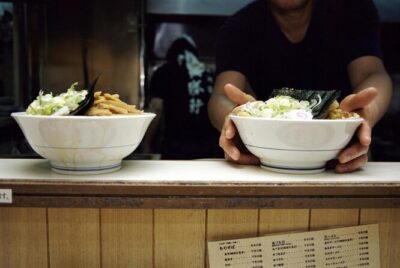
Tokyo Bar Hopping Tour in Shinjuku (All-You-Can-Drink + Dinner)
Read our review →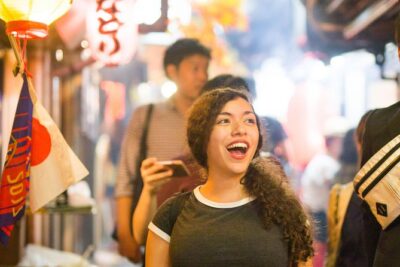
Best of Shinjuku: Izakaya Food Tour (4 Stops, 14+ Tastings)
Read our review →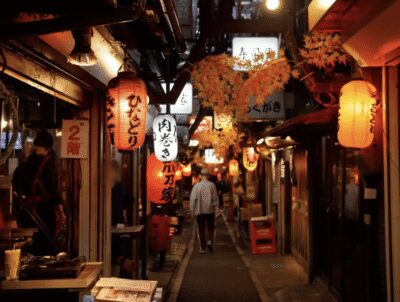
Shinjuku Local Bar and Izakaya Guided Walking Tour
Read our review →
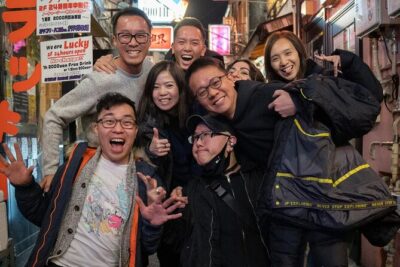
Japanese Speaking Experience Meet the locals Friend Cafe Shibuya
Read our review →
Shinjuku Bar Hopping with All-You-Can-Drink & Dinner
Read our review →
Browse the lists this tour appears in