
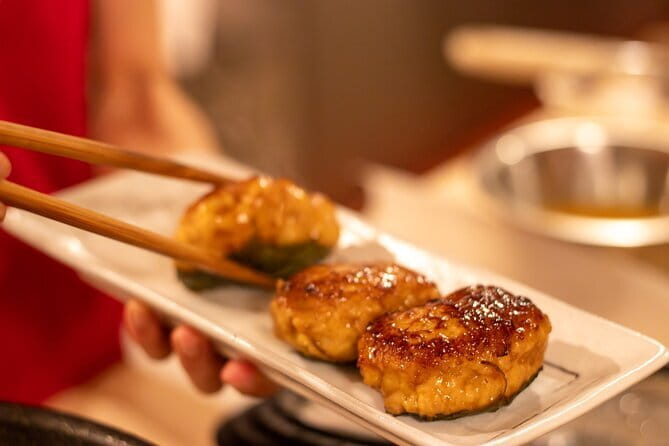
REVIEW · TOKYO
Tokyo: Night Cooking Class: 5 Home-Cooked Japanese Dishes
Japanese home drinking culture comes to life around a small kitchen table, not just at a restaurant counter. In this three-hour class near Iriya Station, you prepare izakaya-style dishes, taste them with drinks, and learn how Japanese cooking fits a relaxed nomikai, or drinking party.
I like the small group of six because it gives you a real chance to handle the food and ask questions. I also like the practical recipes: hand rolls, rolled egg, steak, and miso eggplant use ingredients you can usually find outside Japan. The main consideration is that the class is not suitable for vegans or people needing gluten-free or allergy-safe food.
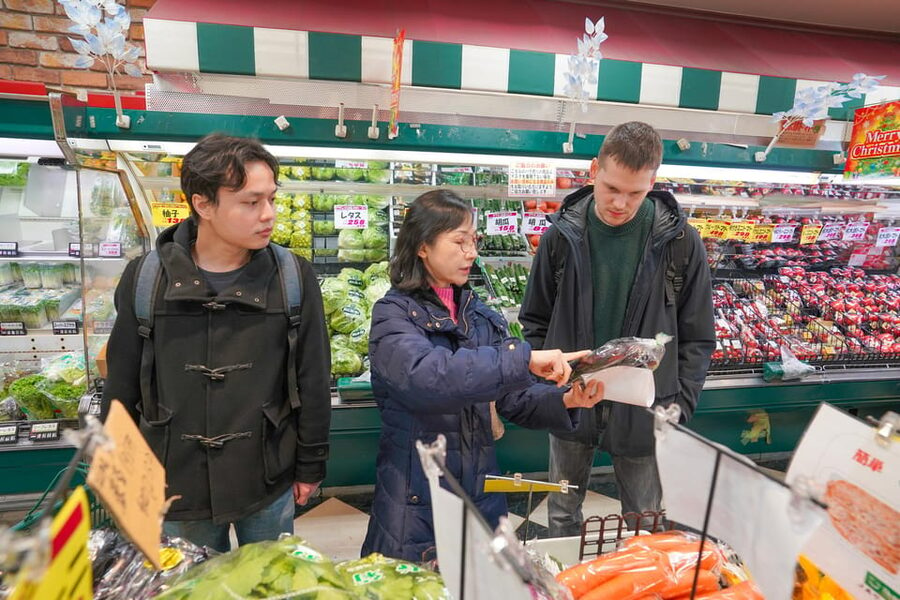
Guides vary by date, but Alice, Masae, and Fuji have led recent sessions. Masae’s class included a stop at a local supermarket before cooking, while Alice was especially good at keeping the evening light and social. The meeting point can be confusing, since Iriya Station has two FamilyMart shops, so look for the one beside Gindako and Doutor Coffee at Exit 2.
Key points at a glance
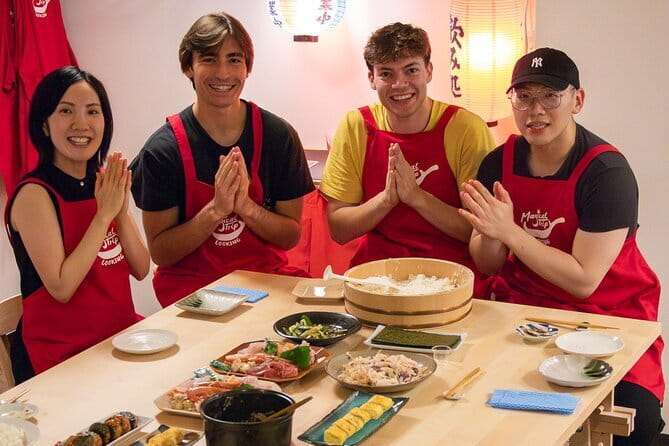
- Japanese home-drinking focus: Learn how small plates are planned around sake, beer, and other drinks.
- Four named hands-on dishes: Make a sushi hand roll, wagyu or tofu steak, Japanese rolled egg, and grilled eggplant with miso sauce.
- Three drinks included: Choose alcoholic or soft drinks, with alcohol available only to people aged 20 and over.
- Small English-speaking class: The group is limited to six, with a local guide leading the cooking.
- Recipes and photos to take home: You can repeat the dishes after your trip and keep photos from the evening.
- Important food limits: Vegetarians can be accommodated, but vegan, gluten-free, and allergy-safe requests cannot be guaranteed.
Cooking Japanese food in an Iriya home setting
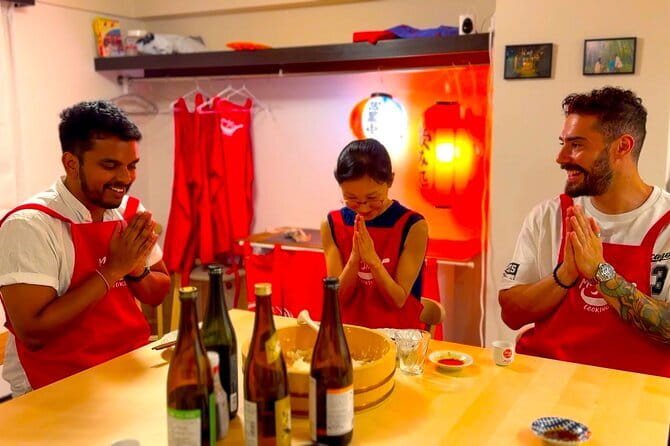
This is not a formal culinary school with rows of workstations and a certificate at the end. It is a social evening built around the way many Japanese people eat at home with friends: several modest dishes, drinks within reach, and conversation between steps.
The izakaya idea is simple. Instead of ordering one large main course, you put several small plates on the table and let each drink lead you toward the next bite. A salty or savory dish may suit beer. A lighter preparation may work better with sake. The class gives you a practical look at that pattern rather than treating Japanese food as a list of isolated recipes.
I like this approach because it explains why the menu includes different textures and flavors. You are not only learning how to cook one famous dish. You are building a meal with crisp, soft, savory, sweet, and smoky elements.
The class is held at night, which matters. The timing fits the subject. You finish with food on the table and drinks in hand, rather than rushing through a morning lesson before sightseeing. Allow about three hours, and avoid scheduling a major evening reservation immediately afterward.
More cooking and drinking classes in Tokyo:
- Tokyo Night Cooking Class: 5 Home-Cooked Japanese Dishes
★ 5.0 · 70 reviews - Kyoto: Afternoon Japanese Izakaya Cooking Class
★ 4.9 · 241 reviews - Izakaya Style Cooking Class
★ 5.0 · 219 reviews
Finding the meeting point at Iriya Station
You meet in front of the FamilyMart next to the Gindako takoyaki shop at Iriya Station Exit 2. Doutor Coffee is another useful landmark.
Pay attention here: there are two FamilyMart shops near Iriya Station. Going to the wrong one could leave you circling the block at the start of the class, so check for both Gindako and Doutor before you wait.
Hotel pickup and drop-off are not included. You need to make your own way to the station and return afterward. That is not a serious drawback if you are already using Tokyo’s rail system, but it is worth adding travel time to your evening plan.
The location also gives you a local neighborhood setting rather than a class attached to a major sightseeing attraction. That makes the activity easy to combine with a day around Ueno or nearby eastern Tokyo, though the experience itself is centered on cooking, not sightseeing.
What you cook during the three hours
The included menu names four main preparations:
- Sushi hand roll
- Wagyu or tofu steak
- Japanese-style rolled egg
- Grilled eggplant with miso sauce
The experience is marketed around five home-cooked Japanese dishes, and the wider description also refers to skewers, tempura, and pickles. The exact cooking sequence can vary, so I would treat the four listed preparations as the dependable core rather than assume every additional item appears at every session.
Sushi hand roll
Hand rolls are a friendly way into sushi because you shape them yourself instead of trying to produce neat restaurant-style pieces. The format also suits a shared table and makes sense for a drink-centered meal.
This is a useful recipe to learn at home because it is less fussy than many sushi preparations. You can adjust the fillings and make individual rolls as people eat. The class supplies the ingredients and equipment, and the recipes are yours to take away.
More cocktail workshops in Tokyo:
- Cartagena: Pub Crawl with Dancing Lessons and Free Shots
★ 4.2 · 211 reviews - Cocktails lessons in Speakeasy
★ 4.5 · 72 reviews - Sip History In a Secret Speakeasy Cocktail Class
★ 5.0 · 40 reviews - Salsa Dance Class and Nightlife Tour in San Juan
★ 4.5 · 33 reviews
Wagyu or tofu steak
The steak course gives the evening its most substantial bite. If wagyu is used, you get to work with a prized Japanese ingredient. A tofu option makes the dish suitable for vegetarians, though this should be arranged in advance rather than assumed at the door.
The vegetarian adaptation is helpful, but it does not make the whole class vegan. The other dishes and cooking methods may still involve ingredients that do not fit a vegan diet.
Japanese rolled egg
Japanese rolled omelette, often called tamagoyaki, looks easy until you try to build tidy layers in a pan. It is a good class dish because the technique matters as much as the ingredients. You learn to work with heat, timing, and repeated folding.
This is also one of the most useful recipes to repeat at home. It can be served as a small breakfast item, lunchbox food, or part of a Japanese-style spread. Expect the result to improve with practice. A first attempt need not look perfect to taste good.
Grilled eggplant with miso sauce
Eggplant with miso gives the menu a soft vegetable dish with a strong savory finish. It also shows how Japanese home cooking can make a few simple ingredients feel complete beside drinks.
I like having this on the menu because it breaks up the meat, egg, and rice-based preparations. If you enjoy miso, this may become one of the easiest recipes to use after returning home.
The wider class description mentions savory skewers, crispy tempura, and tangy pickles as examples of izakaya food. Ask your guide at the start what your particular group will prepare. The exact five-dish lineup is not fully spelled out in the supplied details.
Drinks and the Japanese nomikai tradition
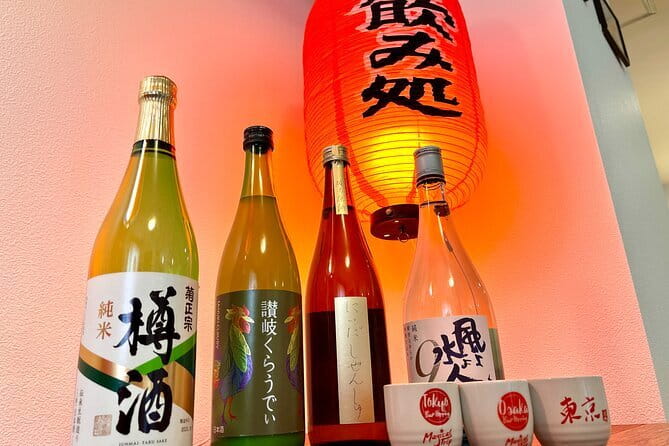
Three cans of alcoholic or soft drinks are included. Depending on your age and the available choices, the drinks may support the pairing part of the class without requiring you to buy a separate tasting package.
Sake and beer are central to the experience, but the point is not to drink heavily. You are learning how people choose small dishes to go with what is in the glass. A salty bite can change the way a drink tastes, while a sweet or miso-based dish can call for something different.
Japanese law limits alcoholic drinks and sake tasting to people aged 20 and over. Anyone younger than that receives soft drinks. Smoking is not allowed.
The three included cans add useful value to the $103 price, especially since you are also paying for food, equipment, instruction, recipes, and photos. Still, the value depends partly on your interest in cooking. If you only want a meal and a few drinks, a restaurant will cost less and take less time. If you want skills you can repeat, the class makes better sense.
The guide makes the difference
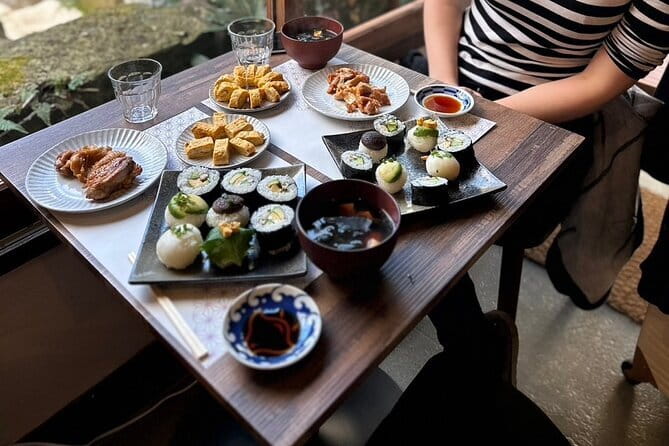
A small cooking class depends heavily on the person leading it. The guide needs to explain technique, keep several dishes moving, and make room for conversation without turning the night into a lecture.
Alice has been praised for making the evening fun while explaining the food clearly. Fuji has also led the class as an effective instructor. Masae’s version included a local supermarket visit before the group went to the cooking studio, giving participants a closer look at the ingredients before using them.
The supermarket stop should not be treated as a guaranteed part of every booking. It is best understood as something that may happen depending on the guide and session. The confirmed core is the hands-on cooking class with an English-speaking local guide.
Because the group is limited to six, you are less likely to feel lost in the crowd. You should have more opportunity to ask why a technique is used or how to replace an ingredient at home. The tradeoff is that a small class can feel more personal, so solo participants need to be comfortable sharing a table with people they have just met.
Who will enjoy this class most
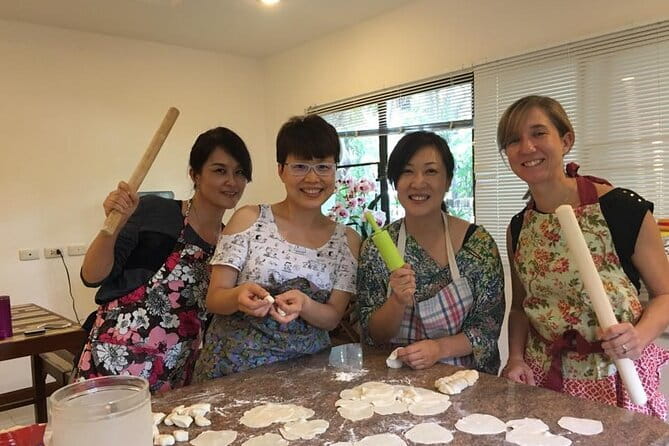
I would recommend this experience to you if you like food, want a social evening, and prefer learning a few useful skills over watching a chef perform. It suits couples and friends, but the small group also gives solo visitors a natural way to meet people.
It works particularly well for:
- Cooks who want recipes they can repeat at home
- Beginners who want direct guidance with Japanese techniques
- Sake and beer fans interested in food pairings
- Families with older children who can follow the age rules
- Vegetarians who arrange suitable ingredients ahead of time
- People seeking an evening activity near eastern Tokyo
The age wording needs care. The activity accepts participants aged six and above, but knife and hot equipment work is limited to people aged 12 and over under a parent or guardian’s supervision. The experience is also marked as not suitable for children under 12, so families should confirm the arrangement before booking rather than rely on the lower age threshold alone.
Pregnant people should not book this activity. The class is also unsuitable for anyone who needs a strictly vegan or gluten-free menu.
Food allergies and mobility concerns
Vegetarians are welcome, and the cooking process can be arranged around that preference. The kitchen cannot promise an allergy-free meal, though, and substitutions may not be possible at every step. If you have a serious allergy or a strict dietary requirement, this is not a safe choice to make casually.
Some parts of the activity are not accessible by wheelchair or stroller. Families with young children should also remember that the playroom can keep little ones occupied, but it does not change the restrictions around knives, heat, or the class’s suitability for children under 12.
These limits do not make the activity poor. They simply mean you need to match the class to your needs before paying.
What the $103 price really covers
At $103 per person, the class is not the cheapest way to eat Japanese food in Tokyo. You are paying for more than dinner, though.
The price includes three hours of instruction, all ingredients, cooking equipment, three alcoholic or soft drinks, recipes, a local English-speaking guide, and tour photos. You do not need to shop for supplies or bring cooking tools. That makes the price easier to justify if you want a ready-made cultural activity rather than a simple restaurant meal.
The recipe cards are especially useful. Tokyo dining can inspire you, but inspiration is not the same as knowing what to do in your own kitchen. Taking the methods home gives the class value after the trip, provided you actually plan to cook the dishes again.
The missing item is transportation. You pay for your own route to Iriya Station and back. The class also does not promise a fixed fifth dish beyond the named menu, so ask what your session includes if that detail matters to you.
Free cancellation is available up to 24 hours before the start time, and you can reserve while paying later. Those terms help if your Tokyo schedule is still shifting.
A practical evening plan
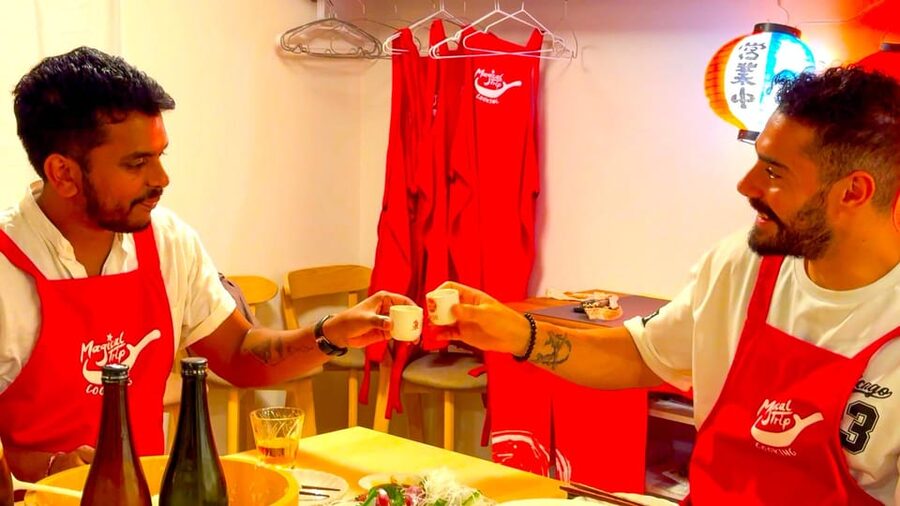
Leave enough time to find the correct FamilyMart at Exit 2. Arrive ready to participate, not simply watch. The best part of the class comes from handling the egg, vegetables, steak or tofu, and hand-roll ingredients yourself.
Wear something comfortable for standing and cooking. The supplied details do not specify a dress code, so avoid bringing anything you would worry about around food preparation or heat.
If you drink alcohol, bring identification if needed to confirm that you are at least 20. If you are vegetarian, tell the operator when booking. Do not wait until the first pan is hot to explain a dietary need.
After class, you leave with recipes and photos. The recipes are the lasting souvenir, while the photos help record a social evening that is more personal than a standard restaurant stop.
Should you book the Iriya cooking class?
Book it if you want a hands-on evening, enjoy small plates and Japanese drinks, and like the idea of recreating the food at home. The combination of a six-person group, three included drinks, practical recipes, and local guidance gives the $103 price a fair return for food-minded visitors.
Skip it if you need a fully accessible activity, strict vegan or gluten-free food, allergy-safe preparation, or a guaranteed menu beyond the four clearly named dishes. Families should also confirm the age arrangements, since the information allows children from age six but limits the practical cooking work to older participants.
For the right person, this is less about mastering restaurant-level technique and more about learning how Japanese home drinking works. You cook several approachable dishes, sit down with drinks, and leave with ideas you can use long after Tokyo.
FAQ
Where does the cooking class meet?
Meet in front of the FamilyMart next to the Gindako takoyaki shop at Iriya Station Exit 2. Look for the FamilyMart beside Doutor Coffee, since there are two FamilyMart shops at Iriya Station.
How long does the experience last?
The class lasts three hours.
What language is the class conducted in?
The live guide speaks English.
How many people can join the class?
The group is limited to six participants.
What food will I prepare?
The included dishes are a sushi hand roll, wagyu or tofu steak, Japanese-style rolled egg, and grilled eggplant with miso sauce. The wider class description also refers to izakaya-style items such as skewers, tempura, and pickles, but the exact menu can vary.
Are drinks included?
Yes. Three cans of alcoholic or soft drinks are included. Sake tasting and alcoholic drinks are available only to people aged 20 and over.
Can vegetarians join?
Yes. Vegetarian participants are welcome, and the ingredients and cooking process can be arranged for them. The class is not available for vegans or people requiring gluten-free food.
Can I cancel the booking?
You can cancel up to 24 hours in advance for a full refund. Reserve now and pay later is also available.
Just added around Tokyo
- Tokyo:Shinjuku Ni-chome LGBTQ+ Bar Hopping Tour with Guide★ 5.0 · 2 reviews
- Tokyo: The Best Izakaya Tour in Shibuya★ 4.7 · 15 reviews
- Tokyo: Shinjuku Nightlife Tour with Karaoke and Bar Hopping★ 4.1 · 4 reviews
- Tokyo: Shinjuku Golden Gai Bar Hopping that only locals know★ 5.0 · 5 reviews
- Tokyo: Shinjuku Hidden Japanese Bar Tour (Neon Light City)★ 5.0 · 4 reviews
- Tokyo Pub Crawl: Unique Japanese Drinks in Shimokitazawa★ 5.0 · 7 reviews
- Tokyo: Shinjuku Bar Hopping & Karaoke Night Tour★ 4.9 · 19 reviews
- Tokyo: Shinjuku Golden Gai Bar Hopping Night Tour★ 4.4 · 8 reviews
Tokyo Bar Tours, compared.
Tokyo Bar Hopping Tour in Shinjuku (All-You-Can-Drink + Dinner)
Read our review →
Best of Shinjuku: Izakaya Food Tour (4 Stops, 14+ Tastings)
Read our review →
Shinjuku Local Bar and Izakaya Guided Walking Tour
Read our review →
Japanese Speaking Experience Meet the locals Friend Cafe Shibuya
Read our review →
Shinjuku Bar Hopping with All-You-Can-Drink & Dinner
Read our review →
Browse the lists this tour appears in