
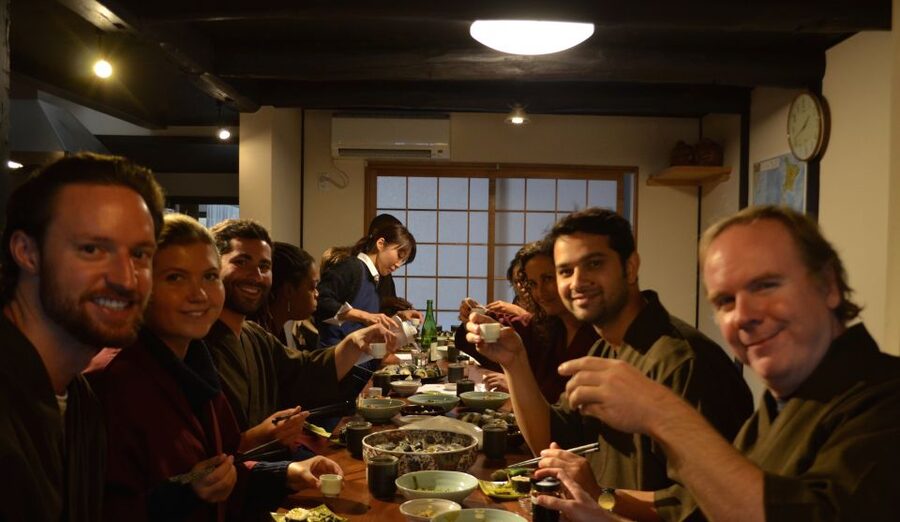
REVIEW · KYOTO
Kyoto: Afternoon Japanese Izakaya Cooking Class
Japanese cooking is often at its best when it is practical, social, and made for sharing. This three-hour izakaya class in central Kyoto teaches the sort of dishes you might eat at home or order at a casual counter restaurant, rather than focusing only on sushi. You cook with an English-speaking chef, sit down to eat, then return to the kitchen for a second round.
I like the useful recipes and the way the class breaks cooking into manageable jobs. I also like the relaxed setting, where you can talk with the instructors while preparing and eating food. The main point to consider is pace: fitting several dishes into three hours means the class can move quickly, especially if you prefer a slow, leisurely lesson.
- Two cooking sessions: Prepare 2 or 3 dishes, eat them, then return to the kitchen for another 2 or 3.
- Home-style Japanese food: Learn dishes intended for everyday meals and izakaya tables, not just tourist staples.
- English instruction: Instructors explain each step in English and help beginners keep up.
- Recipes to take home: Written recipes make it easier to recreate the food after your trip.
- Central Kyoto meeting point: Meet at Cooking Sun, Funayacho, Shimogyo Ward.
- Good indoor choice: The class works well when you want a break from temples, rain, heat, or cold.
Why this Kyoto class is different from a sushi lesson
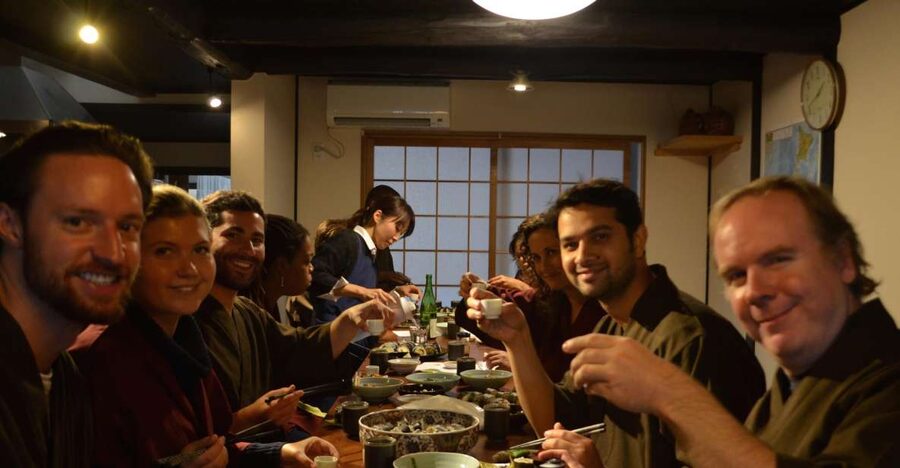
The word izakaya refers to a Japanese drinking-and-dining establishment, usually a casual place where people order several small dishes for the table. Food is central to the experience. You might eat while talking with friends, sharing plates, and ordering another dish when something looks good.
That spirit shapes this class. You are not simply shown a finished plate and sent home with a recipe. You work alongside the chef, ask questions, eat what you prepare, and then continue cooking. The result feels closer to a friendly kitchen gathering than a formal demonstration.
I especially like the focus on dishes that you can make again. Several classes in Japan concentrate on visually impressive food that requires hard-to-find tools or specialist skills. Here, the emphasis is on basic Japanese ingredients, clear steps, and food that suits an ordinary home kitchen.
The exact menu can vary, but the supplied details describe two rounds of 2 or 3 dishes each. Past menus have included as many as six items, including five savory dishes and a dessert. You may also work with ingredients such as dashi and mirin, two building blocks of Japanese flavor. The point is not just to eat a meal. It is to understand how the meal comes together.
Arriving at Cooking Sun in Shimogyo Ward
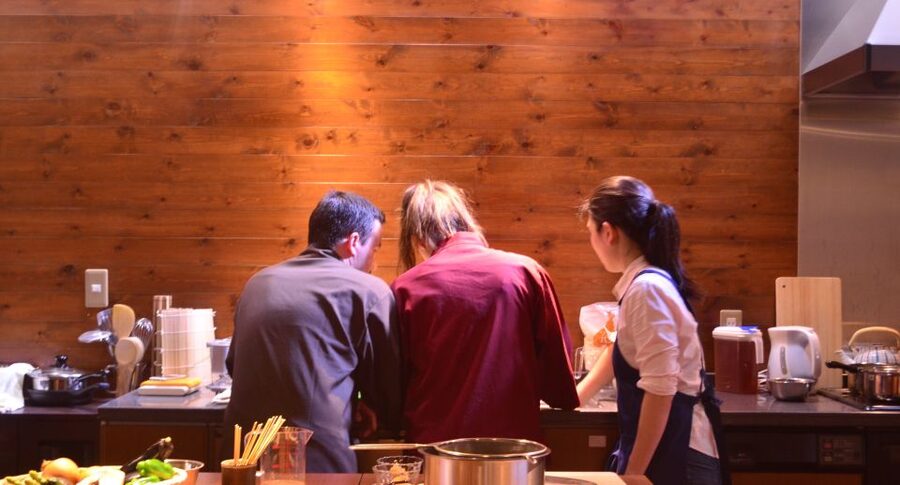
The meeting point is Cooking Sun at Funayacho, in Kyoto’s Shimogyo Ward, postal code 600-8466. You should allow enough time to find the cooking school and arrive ready for a three-hour session.
The class is held in the afternoon, though the exact starting time depends on availability. That timing fits neatly into a Kyoto day. You can visit a temple or market in the morning, cook and eat in the afternoon, then spend the evening exploring the city’s food streets or returning to a favorite restaurant.
You do not need to bring cooking equipment. An apron and utensils are provided, along with the ingredients. The activity is wheelchair accessible, which is useful for anyone planning a Kyoto schedule around mobility needs.
The supplied information does not give a fixed group size. Some sessions may feel quite intimate, while others may include people from several countries. The friendly, conversational format is designed for interaction, so this is a better choice if you enjoy sharing a table and kitchen with other people than if you want a private lesson.
More izakaya bar hopping in Japan:
- Best of Shinjuku: Izakaya Food Tour (4 Stops, 14+ Tastings)
★ 5.0 · 1,863 reviews - Tokyo: Shinjuku Local Bar and Izakaya Guided Walking Tour
★ 4.9 · 1,794 reviews - Tokyo: Shinjuku Local Bar & Izakaya Crawl Tour
★ 5.0 · 890 reviews
The first cooking round: learn, prepare, and eat
The class begins in the kitchen, where the chef introduces the first set of dishes and shows you how to prepare them. Expect clear, practical instruction rather than a lecture. You are guided through the work and can ask about ingredients, methods, and Japanese food customs as you go.
This first round is useful because it gives you time to get comfortable with the equipment and the rhythm of the lesson. You may be chopping, mixing, seasoning, or assembling food while the instructor explains why a particular ingredient matters.
The food is intended to be approachable. You do not need advanced cooking experience, and several participants with little or no confidence in the kitchen have been able to take part fully. The class also suits more experienced cooks. One participant with decades of professional cooking experience found useful lessons in the fundamentals, which says something about the range of the instruction.
When the first dishes are ready, you eat them together. This is not an afterthought. The eating portion helps you understand how the food is served and enjoyed in an izakaya setting. You can talk with the chef, compare results, and ask questions while the techniques are still fresh.
The second round: more dishes and a fuller meal
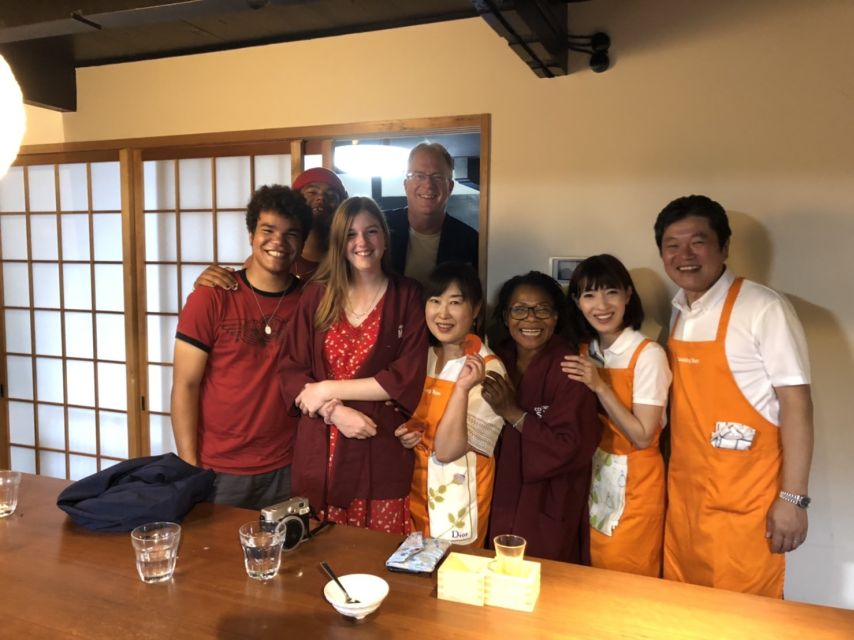
After the first meal, you return to the kitchen for the second set of recipes. This two-part structure keeps the afternoon from becoming one long stretch of chopping and waiting. You get a break to eat, then a fresh set of tasks.
Some menus have included a dessert alongside several savory dishes. That variety gives you a broader look at Japanese home cooking than a single-recipe class. You may learn how different flavors, textures, and serving styles work together across a meal.
The pace is worth noting. Preparing 4 to 6 dishes in three hours requires efficient instruction and shared attention. You should expect to stay engaged rather than sit back for long periods. That is a strength if you want value from your time, but it may feel brisk if you are hoping for an unhurried private lesson.
The instructors are used to helping people with different skill levels. Yumi and Yumiko have been singled out for creating a friendly and entertaining atmosphere, while other sessions have featured instructors praised for clear English and patient guidance. Names and staff can vary, but English instruction is part of the activity.
What you learn about Japanese food culture
The class offers more than a list of recipes. It gives you a practical look at how Japanese food is built around balance, small portions, and shared eating.
Dashi is one example. Learning to make a basic broth helps explain the savory taste found in many Japanese dishes. Mirin is another useful ingredient to recognize. After the class, you may find yourself looking for both in a Japanese grocery store at home.
The izakaya format also explains why several dishes appear during one session. Instead of making one large main course, you prepare a range of foods to eat together. That is a valuable cultural lesson because it changes how you think about a Japanese meal. Food is not always served as one large plate with separate sides. It can arrive as a sequence of small, complementary dishes.
The instructors also discuss ingredients and cooking techniques in plain English. This makes the class useful for a first visit to Japan, but it also has value if you already eat Japanese food regularly and want to understand what goes into it.
More cooking and drinking classes in Japan:
- Izakaya Style Cooking Class
★ 5.0 · 219 reviews - Tokyo Night Cooking Class: 5 Home-Cooked Japanese Dishes
★ 5.0 · 70 reviews - Tokyo: Night Cooking Class: 5 Home-Cooked Japanese Dishes
★ 4.9 · 13 reviews
The food: authentic, tasty, and realistic to repeat
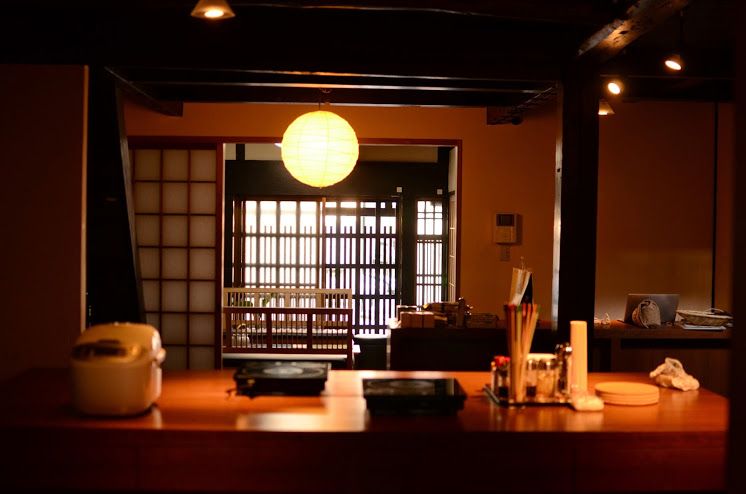
The strongest reason to book this activity is the food itself. The dishes are described as authentic, flavorful, and simple enough to cook at home. You should not expect a restaurant tasting menu or elaborate presentation. The appeal is more practical: you make food that tastes good and can fit into a normal kitchen routine.
Several menus have produced six dishes, while the formal description allows for 2 or 3 dishes in each of the two sessions. That difference suggests the precise menu may change. If a particular dish matters to you, check the current offering before booking.
The recipes are a major benefit. You receive written instructions at the end, and the explanations are detailed enough to help you remember the method later. This turns the class into something more lasting than an afternoon meal. You can use the recipes to cook for friends, test Japanese ingredients at home, or recreate part of your Kyoto trip in your own kitchen.
Vegetarian needs have been accommodated in at least one session, including separate pans and utensils. Still, you should tell the local supplier about dietary requirements when booking. The available information does not promise a specific menu for every allergy, vegan diet, or restriction, so ask before you reserve if your needs are serious.
The instructors and the mood of the room
The teaching style is one of the most praised parts of the experience. Instructors are described as warm, encouraging, organized, and easy to understand. That matters in a cooking class because unclear directions can leave you watching instead of participating.
The class is designed for conversation. You can speak with the chef while cooking and eating, much as you would at an izakaya counter. This creates a social afternoon and gives you a natural chance to ask about Japanese food customs.
The atmosphere also works for mixed groups. Couples, families, teenagers, solo participants, and people with very different cooking abilities have taken part. If one person in your group loves cooking and another rarely enters the kitchen, both can still find a role.
I would not book this expecting a silent, technical workshop. The charm comes from the contact with the instructors and the shared meal. If you prefer to work alone, you may find the social format less appealing.
Is $67 a fair price?
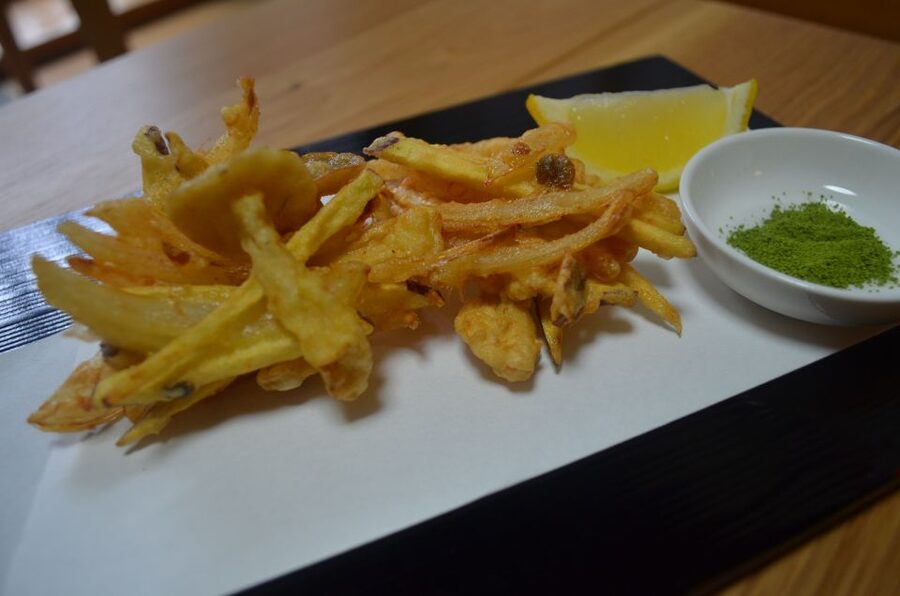
At $67 per person, the class is not the cheapest way to eat lunch in Kyoto. You could buy several inexpensive meals for that amount. But the comparison is not quite fair because the price includes instruction, ingredients, an apron, utensils, multiple dishes, and the meal you prepare.
The recipes add value after the class ends. You are paying for skills and ideas you can use at home, not only for food eaten during the afternoon. For someone interested in Japanese cooking, that makes the price reasonable.
The class also uses three hours well. You get two cooking periods, two chances to eat, and time to talk with the instructor. I see it as good value for people who want a hands-on cultural activity, particularly if you are looking for an indoor break from sightseeing.
It is less compelling if your main goal is simply to eat as cheaply as possible or if you have little interest in cooking. In that case, a local restaurant gives you more time to focus on the food itself.
Who should book this experience?
I would recommend the class to:
- First-time visitors who want an activity connected to everyday Japanese life
- Couples and families looking for something everyone can do together
- Beginner cooks who want clear instruction
- Experienced cooks interested in dashi, mirin, and Japanese home techniques
- People who want recipes they can recreate after returning home
- Anyone needing a three-hour indoor activity in Kyoto
It is also a good choice for a parent and teenager. The work is active without being physically demanding, and the meal gives you a shared result at the end.
You may want to choose a different activity if you want an advanced professional workshop, a private class, or a fixed menu built around one specific dish. The exact dishes may change, and the class moves at a steady pace.
Practical details before you reserve
The experience lasts three hours and is taught in English. Meet at Cooking Sun, Funayacho, Shimogyo Ward, Kyoto, Kyoto 600-8466.
Ingredients, an apron, utensils, and the cooking lesson are included. The activity is wheelchair accessible. If you have dietary requirements, tell the local supplier when booking rather than waiting until you arrive.
You can cancel up to 24 hours before the activity for a full refund. You can also reserve now and pay later, which is useful when your Kyoto plans are still shifting.
The class has a 4.9 rating from 241 reviews, with especially strong praise for the instructors, the clear English explanations, the tasty food, and the take-home recipes. Those are the areas I would weigh most heavily when deciding if the class fits your trip.
Should you book the Kyoto izakaya cooking class?
Book it if you want to do more than look at Japanese food. In three hours, you learn several home-style dishes, eat what you prepare, meet English-speaking instructors, and leave with recipes you can use again.
The best reason to choose this class is its practicality. It avoids the narrow focus of a sushi-only lesson and gives you a broader taste of the food served in Japanese homes and casual izakaya restaurants. Just expect a full afternoon and a fairly brisk pace.
At $67, it makes sense for curious eaters, families, couples, and anyone who likes bringing a useful skill home from a trip. If that sounds like you, Cooking Sun offers a strong way to spend an afternoon in Kyoto.
FAQ
How long does the Kyoto izakaya cooking class last?
The class lasts three hours.
Where does the cooking class meet?
Meet at Cooking Sun, Funayacho, Shimogyo Ward, Kyoto, Kyoto 600-8466.
What language is the class taught in?
The instructor teaches in English.
How many dishes will I prepare?
The class is organized into two parts. You prepare 2 or 3 dishes in the first part and another 2 or 3 dishes in the second. Some menus have included six dishes, including a dessert.
Are ingredients and cooking equipment included?
Yes. Ingredients, an apron, and utensils are included.
Can I attend if I have dietary requirements?
You should tell the local supplier about any dietary requirements when booking. The available information does not specify a standard menu for every dietary need.
Can I cancel the booking?
Yes. You can cancel up to 24 hours in advance for a full refund. You can also reserve now and pay later.
More Cocktail Workshops in Japan
- Cartagena: Pub Crawl with Dancing Lessons and Free Shots
★ 4.2 · 211 reviews - Cocktails lessons in Speakeasy
★ 4.5 · 72 reviews - Sip History In a Secret Speakeasy Cocktail Class
★ 5.0 · 40 reviews - Salsa Dance Class and Nightlife Tour in San Juan
★ 4.5 · 33 reviews
Just added around Japan
- Tokyo night out★ 5.0 · 3 reviews
- Izakaya & Bar Hopping Tour Around Aomori Station★ 5.0 · 3 reviews
- Asakusa Foods & Drinks, Culture Nightlife★ 5.0 · 5 reviews
- Tokyo: The Best Izakaya Tour in Shibuya★ 4.7 · 15 reviews
- Tokyo: Shinjuku Nightlife Tour with Karaoke and Bar Hopping★ 4.1 · 4 reviews
- Tokyo:Shinjuku Ni-chome LGBTQ+ Bar Hopping Tour with Guide★ 5.0 · 2 reviews
- Tokyo: Shinjuku Golden Gai Bar Hopping that only locals know★ 5.0 · 5 reviews
- Tokyo: Shinjuku Hidden Japanese Bar Tour (Neon Light City)★ 5.0 · 4 reviews
Kyoto Bar Tours, compared.




Browse the lists this tour appears in