
REVIEW · KYOTO
Kyoto Local Gourmet Night Experience: Kaiseki & Izakaya & Matcha
Kyoto’s best evening meal may not come with a grand view or a famous sign. It may arrive in three modest restaurants, reached on foot with a local guide who knows which door to open. This small-group food walk links Gion, Pontocho, and the Kamo River with Kyoto dishes, sake, desserts, and tea.
I like two things right away: the group is capped at seven people, and the meal is spread across three different restaurants rather than one long sitting. I also like the mix of old streets and ordinary local life, from machiya houses in Gion to riverside paths where Kyoto residents go to relax.
The main drawback is that the exact restaurant lineup can vary, and vegetarians must request a suitable menu in advance. Vegan and gluten-free diets cannot be accommodated, so this is not the easiest choice for strict dietary needs.
Key points to know before booking
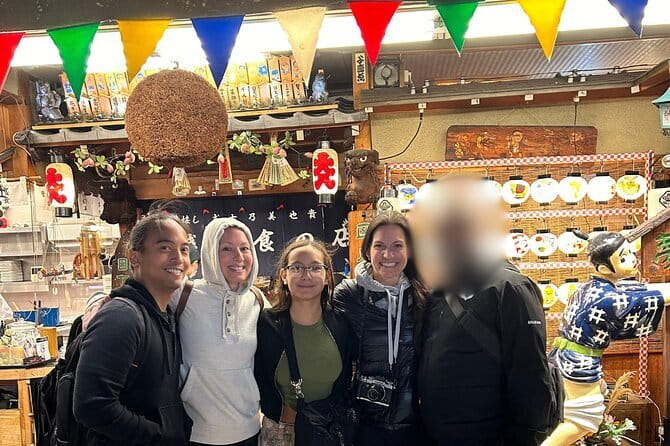
- Three restaurants, three different parts of dinner: You receive a full meal with desserts, drinks, and several styles of Kyoto dining.
- A maximum of seven people: The compact group makes conversation with the guide easier and helps the evening feel personal.
- Gion, Pontocho, and the Kamo River: You see Kyoto’s atmospheric old lanes as well as the places locals use for evening walks.
- Guides make the difference: Akari, Ayane, Lisa, and Sura are among the guides praised for friendly, relaxed, engaging tours.
- Drinks are included: Alcoholic and non-alcoholic options include sake, tea, coffee, or soda, with three drinks included.
- Plan for a walking evening: The tour lasts about three and a half hours, with time set aside for moving between stops.
Why this Kyoto food tour works
Many food tours in Kyoto focus on one market, one cooking lesson, or one polished restaurant. This experience takes a different route. You spend the evening moving through several neighborhoods and trying food in three separate places, which gives you a better sense of how a night out in Kyoto can unfold.
The price is $70.94 per person. That is a fair figure if you make good use of the included dinner, desserts, and three drinks. You are also paying for the guide’s local knowledge, neighborhood explanations, and help with places you might not find on your own.
I would not book it only as a sightseeing walk. The real value is the combination of food and conversation. If you want a quiet, formal kaiseki meal with a fixed menu and little walking, choose a dedicated restaurant instead. If you want to sample several local settings without having to plan each stop yourself, this tour makes more sense.
The title mentions kaiseki, izakaya, and matcha. The practical experience centers on Kyoto cuisine, izakaya-style dining, sake, tea, desserts, and local streets. The supplied details do not give a precise matcha preparation or a fixed kaiseki menu, so you should treat those terms as a guide to the evening’s themes rather than a promise of one formal ceremony or elaborate tasting menu.
More izakaya bar hopping in Kyoto:
- Kyoto: Izakaya Bars Guided Walking Tour
★ 4.9 · 815 reviews - Kyoto: Afternoon Japanese Izakaya Cooking Class
★ 4.9 · 241 reviews - Izakaya Style Cooking Class
★ 5.0 · 219 reviews
Starting at Minamiza Theater
The meeting point is Minamiza Theater at the eastern end of Shijo Bridge in Higashiyama. This is a useful place to begin because it puts you near Gion, the Kamo River, and Pontocho from the start.
Minamiza is one of Kyoto’s historic theaters and is associated with traditional performances. You may not enter the theater during this activity, but meeting outside gives the evening a clear cultural setting instead of beginning at a generic station entrance.
Arrive with enough time to find the theater and your guide. The tour ends back at the same meeting point, which is helpful if you are staying near central Kyoto and do not want to work out a new route late at night.
The activity uses a mobile ticket, and confirmation is provided when you book. It is near public transportation, but the evening still involves walking and time between stops. Wear shoes that are comfortable on city streets.
Gion and Shirakawa-dori: Kyoto after dark
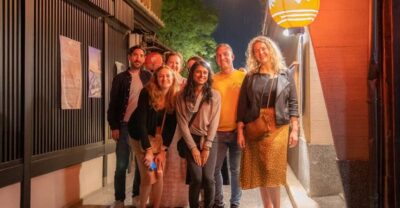
The first stretch takes you through Gion, including the attractive Shirakawa-dori area. Traditional wooden buildings, lanterns, and the nearby stream create the sort of Kyoto scene that can feel almost too carefully arranged, though this is still a working neighborhood rather than a stage set.
Your guide explains the streets while you walk and points out the role of the old machiya houses and teahouses. Gion is linked with geisha and maiko appointments, so you might see one passing through on the way to work. Do not treat that as the main goal of the tour. The better approach is to enjoy the street and give people space.
This section lasts about an hour and a half, though that time includes food and movement. You may also pass near Yasaka Shrine, one of the area’s major landmarks. The shrine hosts festivals during the year, but the tour information does not promise a festival visit on your date.
The benefit of beginning here is atmosphere. You get your bearings in one of Kyoto’s most recognizable districts before moving into smaller dining settings. The limitation is that Gion can be busy, especially around its best-known lanes. The guide’s value is greatest when the streets are crowded and you need context rather than another photo.
Pontocho and the art of a small evening meal
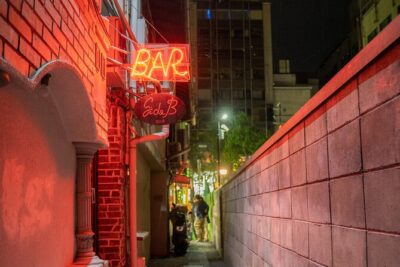
Pontocho is a narrow dining lane running close to the Kamo River. Its wooden buildings and lanterns give it a strong old-Kyoto feel, but it is also a real nightlife district packed with restaurants and bars.
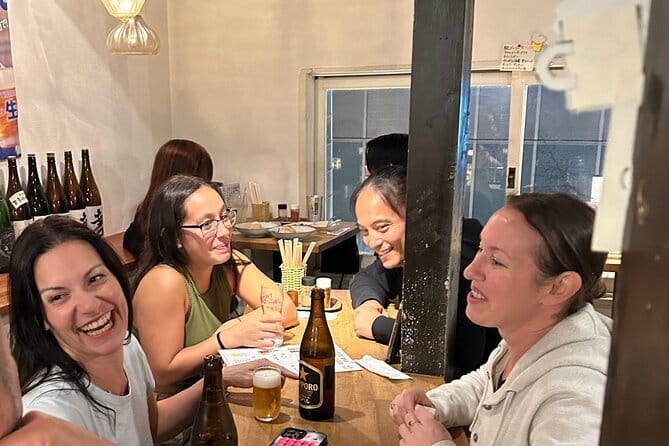
Here, you can expect light snacks and Japanese sake while the guide explains the street and its place in Kyoto’s food culture. The stop lasts about an hour. It is not simply a pause for a drink. You learn how Pontocho connects traditional architecture, evening dining, and the river.
In summer, some restaurants use riverside platforms called kawadoko. These are a seasonal feature, and the tour description does not promise that you will dine on one. Still, the river setting helps explain why Pontocho has long been such a popular place for a meal.
I like this stop because sake can be easier to appreciate with a guide who explains what you are drinking and why it fits the food. Three drinks are included across the experience, with alcohol-free options available. Anyone under 20 will receive no alcoholic drinks, as required by the tour rules.
You should not expect unlimited drinks or a bar crawl. The included beverages are part of the meal plan, and any extra snacks or orders are your responsibility. That is a sensible arrangement for a food tour, but it is worth knowing before you sit down.
A few more bar nights around Kyoto worth a look
- Kyoto Bar Hopping Night Tour
★ 5.0 · 613 reviews - Kyoto Local Bar Crawl in Kawaramachi Area
★ 5.0 · 378 reviews - Kyoto : Bar Hopping Tour in Pontocho Alley at Night
★ 4.8 · 18 reviews - Kyoto: KITSUNE Nightclub Admission Ticket with Drink
★ 4.2 · 13 reviews
The Kamo River and a sweeter finish
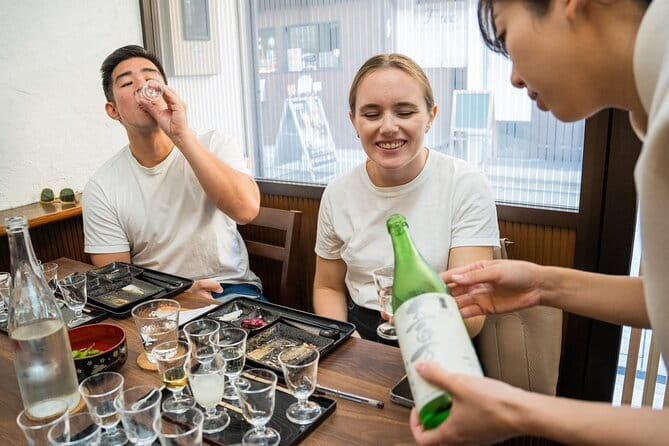
The Kamo River is one of central Kyoto’s most familiar public spaces. Its banks are used for walks, quiet breaks, and casual gatherings, and they offer a welcome change after the tighter lanes of Gion and Pontocho.
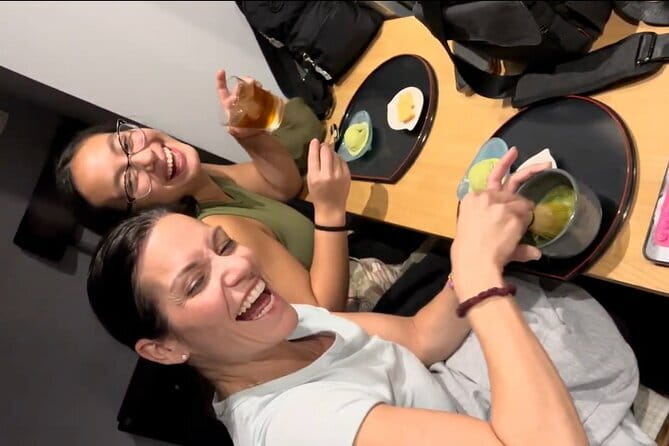
During this part of the evening, you learn about places familiar to local residents and visit nearby shops for desserts and sake. The stop is scheduled for about an hour. Evening light along the river can make this the calmest portion of the tour, with room to slow down and talk.
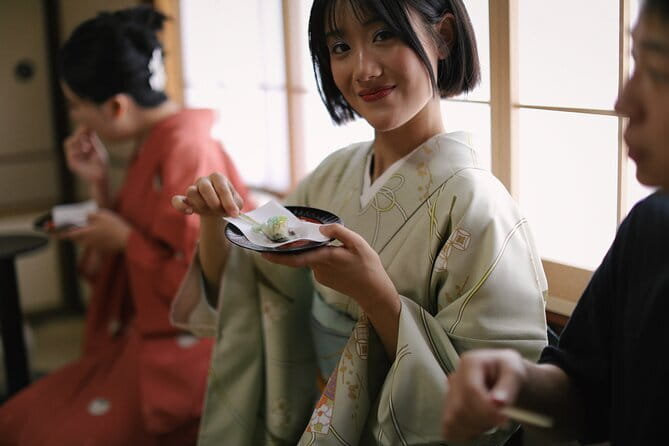
Dessert matters here because it rounds out an evening that is otherwise focused on savory Kyoto food and izakaya dishes. Tea, coffee, and soda are included among the drink choices, and the tour title places matcha among its themes. The exact dessert and tea selections are not fixed in the information provided, so you should expect local sweets and tea rather than one named dessert or formal tea ceremony.
The river stop also gives you a more ordinary view of Kyoto. Gion’s old lanes are designed to impress, while the Kamo River is where people go simply to sit, stroll, and meet friends. That contrast is one of the strongest parts of the route.
Passing through Kawaramachi
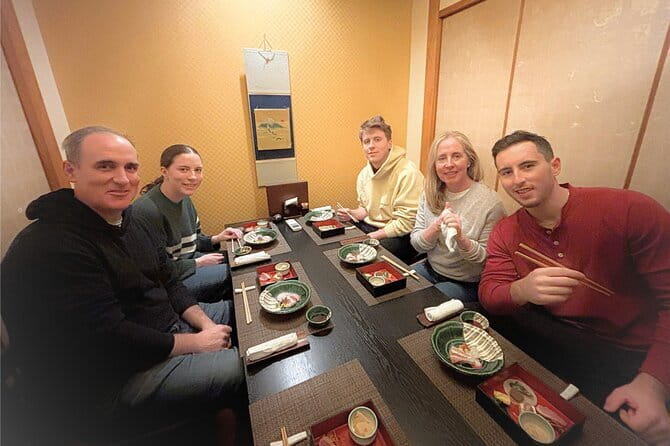
Kawaramachi-dori is the modern downtown side of the evening. It has shops, cafes, and the everyday city energy that sits beside Kyoto’s older districts.
The tour only passes through this area. There is no separate meal or long activity listed here, so keep your expectations modest. Its purpose is to show you the contrast between historic Gion and central Kyoto’s shopping streets.
That contrast improves the route. Kyoto is not only wooden houses and temple approaches. It is also a busy city where old customs and present-day shopping share the same few blocks. A short walk through Kawaramachi helps put the earlier stops in context.
What you actually eat and drink
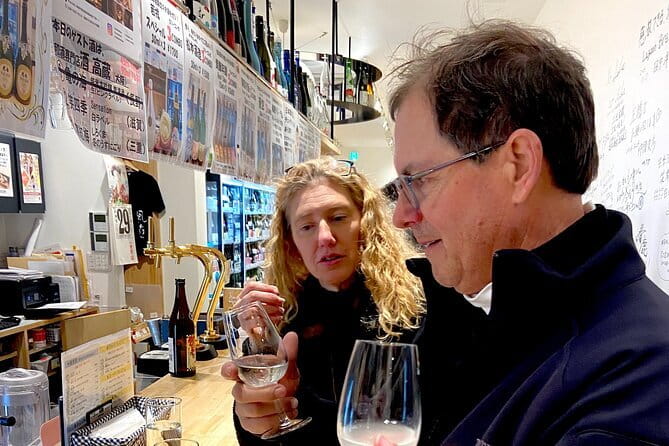
The included package provides dinner, desserts, and drinks at three different restaurants. The meals are intended to be filling, not just a few sample bites, which makes the $70.94 price easier to assess.
You may receive local Kyoto dishes, izakaya-style food, light snacks, sake, and sweets. The precise dishes are not listed, so do not book this expecting a guaranteed item such as a particular type of sushi, tofu dish, or wagyu course.
The range is the point. One restaurant may offer a different mood or style from the next, and that variety keeps the evening from feeling like one extended dinner reservation. It also lets you compare how small local places handle food, drinks, and service.
Three drinks are included, and non-alcoholic choices are available. Coffee and tea are included as well. Additional food or drinks cost extra, so bring a payment method if you tend to order beyond the included meal.
Vegetarians can be accommodated if you mention it when booking. The available vegetarian menu includes fish, so this is not suitable for someone who avoids all animal products. Vegan and gluten-free menus are unavailable.
The guide and group size
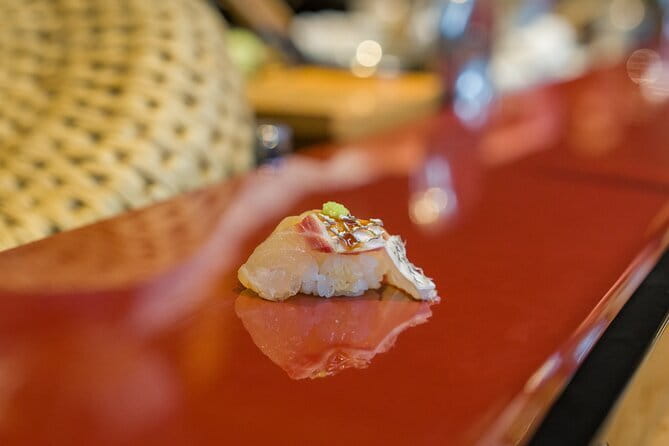
A food walk depends heavily on the person leading it. The named guides connected with this experience include Akari, Ayane, Lisa, and Sura. Their strengths, as reflected in the available feedback, include relaxed conversation, clear explanations, and the ability to keep younger children engaged.
One useful detail is that a delayed flight once left a guest with a private version of the tour. That is not something you should count on, but it shows how a small booking can sometimes change the feel of the evening.
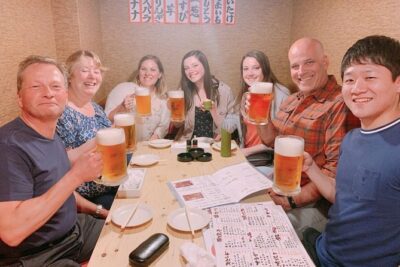
The normal maximum is seven people. That is small enough for questions and conversation without making the guide repeat every point to a large crowd. It also suits anyone who feels unsure about ordering in a Japanese restaurant or navigating a narrow izakaya.
The guide is not only there to lead the way. You get help understanding the neighborhoods, local eating habits, and the difference between a tourist-facing street and a smaller local business nearby. That is especially useful if this is your first evening in Kyoto.
Who should book this experience
I would recommend this tour to you if you want to eat local food but do not want to spend days researching restaurant reservations. It is also a good choice if you enjoy walking, small groups, neighborhood stories, and trying several places in one night.
Families can enjoy it, especially with a guide who is comfortable keeping children involved. The evening does include alcohol, but non-alcoholic drinks are available and guests under 20 are not served alcohol.
This is also a practical first-night activity. You get an introduction to central Kyoto, learn where Gion and Pontocho sit, and finish back at the place where you started. Afterward, you may have a better idea of which neighborhoods you want to revisit.
I would choose something else if you need vegan or gluten-free food, want a fully formal kaiseki meal, or prefer not to walk between restaurants. The route includes transportation time, and the exact food lineup is not specified.
Booking timing, cancellation, and practical details
The experience is commonly booked about 24 days ahead, so reserve early if your Kyoto dates are fixed. Confirmation arrives at booking, and the mobile ticket keeps the arrival process simple.
Free cancellation is available up to 24 hours before the start time for a full refund. Changes or cancellations made inside that 24-hour window are not accepted for a refund, and the cutoff follows local Kyoto time.
The activity lasts about three hours and 30 minutes. Since some of that time is used to move between locations, you should not expect three and a half hours of uninterrupted dining.
The tour returns to Minamiza Theater. Most people can participate, and the route is near public transportation. Bring comfortable shoes, arrive ready for an evening walk, and state any vegetarian request at booking rather than waiting until the first restaurant.
Should you book the Kyoto Local Gourmet Night Experience?
Book it if you want a friendly introduction to Kyoto food, drinks, and evening neighborhoods without managing the details yourself. The strongest reasons are the three-restaurant format, the small group, the included drinks, and the chance to see Gion, Pontocho, the Kamo River, and Kawaramachi in one outing.
The $70.94 cost is reasonable when you count a full dinner, desserts, three drinks, a local guide, and three and a half hours of activity. Just keep the limits in mind: food choices are not fully listed, dietary support is narrow, extra orders cost more, and the matcha or kaiseki elements are not described as a formal ceremony or fixed course.
For most first-time visitors who want a social and practical night out, I would book it. For strict dietary needs or a polished, quiet dining experience, I would spend the money on a restaurant chosen for those specific priorities instead.
FAQ
Where does the tour start and finish?
The tour starts at Minamiza Theater, at the eastern end of Shijo Bridge in Kyoto’s Higashiyama Ward. It ends back at the same meeting point.
How long does the experience last?
The experience lasts approximately three hours and 30 minutes. Some of that time is used for transportation between the food stops.
How many people can join the tour?
The maximum group size is seven people.
What food and drinks are included?
Dinner and desserts are served at three different restaurants. Three drinks are included, with alcoholic and non-alcoholic choices, along with coffee or tea and soda. Extra snacks or orders are not included.
Can vegetarian, vegan, or gluten-free diets be accommodated?
A vegetarian menu can be arranged if you request it when booking, but it includes fish. Vegan and gluten-free menus are unavailable.
Are alcoholic drinks served to everyone?
No. Alcoholic beverages are not served to participants under 20. Non-alcoholic drinks are available.
Just added around Kyoto
- Private Food & Sake Tour in Central Kyoto with Sake Sommelier★ 5.0 · 24 reviews
- Hidden Bamboo gem and Japanese foods in Izakaya Private Tour★ 5.0 · 3 reviews
- Kyoto Food & Drink Tour with a Local: Private Custom Izakaya Experience★ 5.0 · 2 reviews
- Kyoto Night Food & Izakaya Hopping Tour in Pontocho★ 4.0 · 3 reviews
- Bar Hopping Private Tour in Kyoto(WAKUWAKU area)★ 5.0 · 4 reviews
- See What You Can’t See by Day — Explore Kyoto at Night by E-Bike★ 5.0 · 7 reviews
- Kyoto Night Foodie Tour – Hidden Izakayas & Local Flavors★ 5.0 · 5 reviews
- Osaka : Bar Hopping Tour★ 5.0 · 2 reviews
Kyoto Bar Tours, compared.
Private Food & Sake Tour in Central Kyoto with Sake Sommelier
Read our review →
Browse the lists this tour appears in