
REVIEW · KYOTO
Izakaya Style Cooking Class
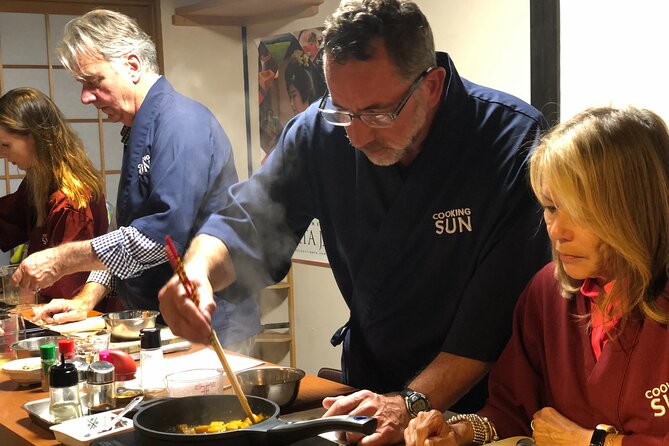
Japanese izakaya cooking is less about one grand dish than a table filled with small, well-seasoned plates. In Kyoto, this three-hour class takes you inside that everyday food culture, showing you how to make dashi, balance Japanese sauces, and prepare several home-style dishes before sitting down to eat what you cooked. I like the hands-on format, and I like that you leave with recipes you can actually use at home.
The instructors keep the work moving with prepared ingredients, clear demonstrations, and help at each station. Families can take part together, and the class works for beginners as well as serious home cooks. One thing to watch: the menu changes with the season, and it may include a Western-style dish, such as pasta, rather than Japanese noodles. Also ask about the price before accepting extra sake, since one participant was charged 600 yen per glass after it was offered.
Key points at a glance
- Learn the base of Japanese flavor: You prepare dashi, the soup stock that gives many Japanese dishes their savory depth.
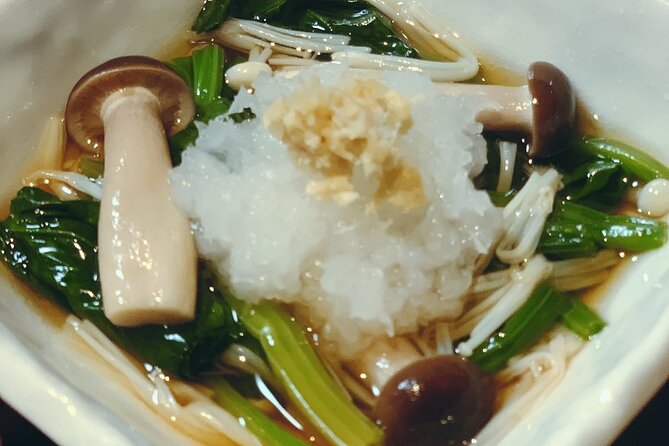
- Make several dishes in one afternoon: Past menus have included sesame spinach, teriyaki yellowtail, vegetable chowder, mushroom tempura, vegetable rice, cucumber salad, pumpkin soup, mochi, and pasta.
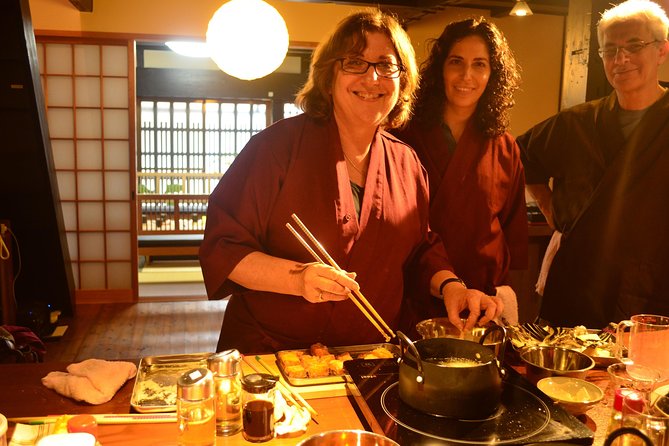
- Cook in a traditional Kyoto wood house: The Cooking Sun studio at 679 Funayacho provides the setting for this small-group lesson.
- Expect a busy, well-prepared class: Ingredients are partly prepared in advance, leaving more time for cooking, tasting, and learning.
- Bring home practical recipes: The recipes are provided so you can repeat the meal for family and friends.
- Plan for three hours and dinner: The class starts at 2pm and ends back at the cooking studio after you eat.
Why izakaya cooking is worth your Kyoto afternoon
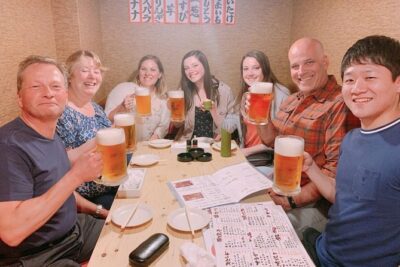
An izakaya is often described as Japan’s answer to tapas, but that comparison only goes so far. It is a casual place for small plates, drinks, and conversation, used by everyone from young adults to older diners. The food is usually approachable, varied, and made for sharing rather than ceremony.
The tradition grew from sake shops in the Edo era. Some shops began serving food alongside their bottles, encouraging customers to stay longer. That history helps explain the format you learn here: several modest dishes, different textures, and sauces that make simple vegetables, fish, rice, and soup more interesting.
I like this class because it gets beyond the familiar sushi-and-teriyaki version of Japanese food. You learn the food that appears in homes and casual restaurants, where seasoning and preparation matter more than fancy presentation.
More izakaya bar hopping in Japan:
- Best of Shinjuku: Izakaya Food Tour (4 Stops, 14+ Tastings)
★ 5.0 · 1,863 reviews - Tokyo: Shinjuku Local Bar and Izakaya Guided Walking Tour
★ 4.9 · 1,794 reviews - Tokyo: Shinjuku Local Bar & Izakaya Crawl Tour
★ 5.0 · 890 reviews
Starting at 2pm in Kyoto’s wood-house studio
The meeting point is Cooking Sun Kyoto, at 679 Funayacho, Shimogyo Ward. The activity begins at 2pm and finishes at the same location. The exact studio location is also provided when you book, so check your confirmation before setting out.
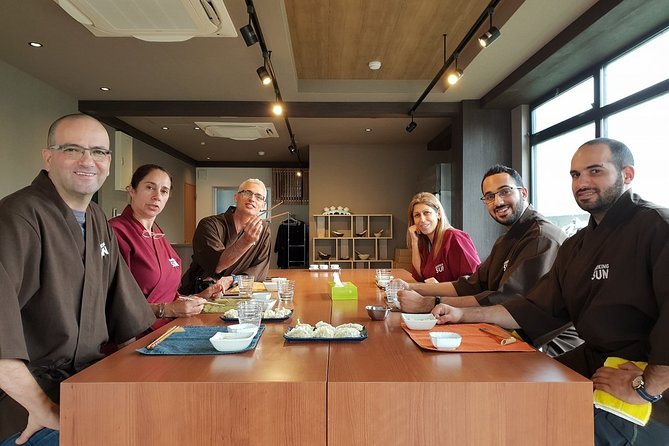
The studio is described as a traditional wood house, which gives the class a more local feel than a hotel conference room. You receive an apron, all cooking ingredients, and instruction in English. The maximum group size is eight people, although the number in a particular session can vary.
That size matters. You are not simply watching a chef work from the back of a large room. You handle ingredients, use the equipment, and get help when a knife cut or sauce needs correcting. A few sessions have included only four or five participants, while larger groups still benefit from several instructors working together.
Allow enough time to reach the studio without rushing. Hotel pickup and drop-off are not included, and the activity is near public transportation. You will need to make your own way there and back.
The first lesson: dashi and Japanese seasoning
The class begins with an introduction to izakaya and the place it holds in Japanese food culture. The chef then explains the ingredients and methods used during the session.
The most useful part for a home cook is the lesson on dashi. This Japanese soup stock forms the base of many dishes, and learning how it is prepared gives you a better sense of why Japanese food can taste full without being heavy. The class also covers seasoning techniques, including the differences between sauces and condiments.
That detail is important. Japanese cooking can look simple on the plate, but the balance of salty, sweet, savory, sour, and toasted flavors takes care. A small change in sauce or stock can shift the whole character of a dish. The instructor explains those differences while you work, rather than leaving you with a recipe and no idea why it succeeds.
You should expect demonstrations followed by your own preparation. The pace is active, but ingredients are partly prepared before you arrive. That saves time and lets the class make a broader range of food. It also means this is not a full professional kitchen apprenticeship. You learn useful techniques, but you do not spend hours cleaning, chopping, or making every component from scratch.
Six dishes, seasonal ingredients, and a flexible menu
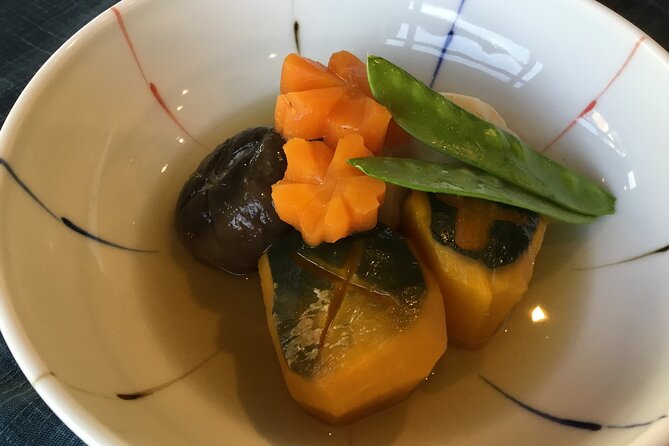
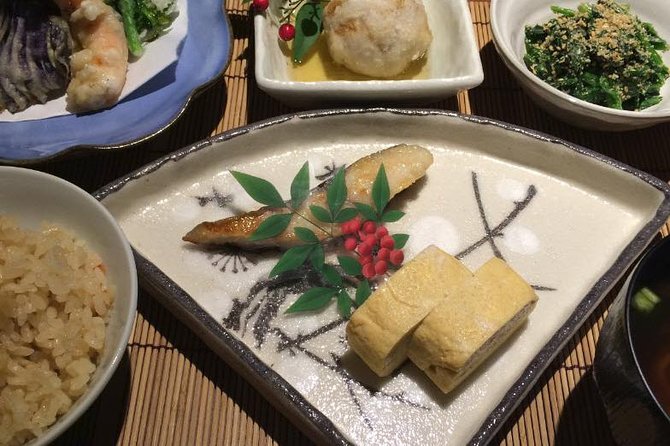
The menu is not fixed year-round. It changes with seasonal ingredients, so the exact dishes depend on what is available. Possible examples include spinach with sesame sauce, teriyaki yellowtail, vegetable chowder, mushroom tempura, and rice with vegetables.
Past classes have also included cucumber salad, pumpkin soup, mochi dessert, and pasta. One participant would have preferred Japanese noodles instead of pasta, which points to a fair limitation: the word izakaya does not guarantee that every dish will be a classic Japanese favorite.
Still, the variety is one of the best reasons to book. You are likely to work with vegetables, fish, soup, rice, sauces, and dessert in one afternoon. That gives you a useful introduction to several Japanese flavors instead of teaching one signature recipe.
The food is generally presented as healthy and easy enough to make at home. The recipes are designed for cooking after your trip, not just for a one-time class photo. If you enjoy cooking, pay attention to the flavor combinations and the utensils used. One experienced home cook particularly valued learning new combinations and tools.
Seasonal changes are also part of the appeal. You may not receive the same six dishes described by another participant, but you get food suited to the time of year. If a particular ingredient matters to you, ask the class leader what is planned before the session starts.
More cooking and drinking classes in Japan:
- Kyoto: Afternoon Japanese Izakaya Cooking Class
★ 4.9 · 241 reviews - Tokyo Night Cooking Class: 5 Home-Cooked Japanese Dishes
★ 5.0 · 70 reviews - Tokyo: Night Cooking Class: 5 Home-Cooked Japanese Dishes
★ 4.9 · 13 reviews
A class that works for beginners and families
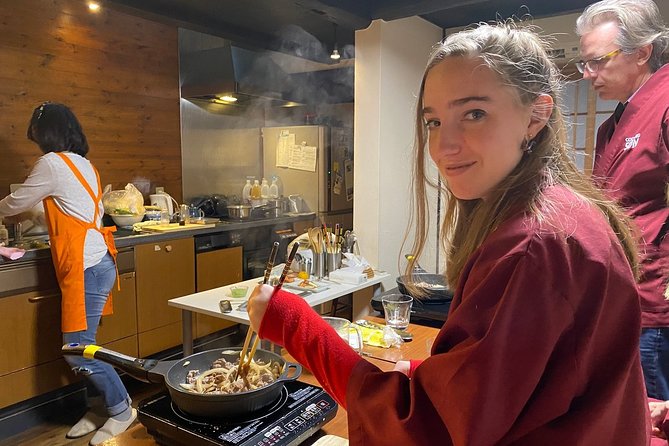
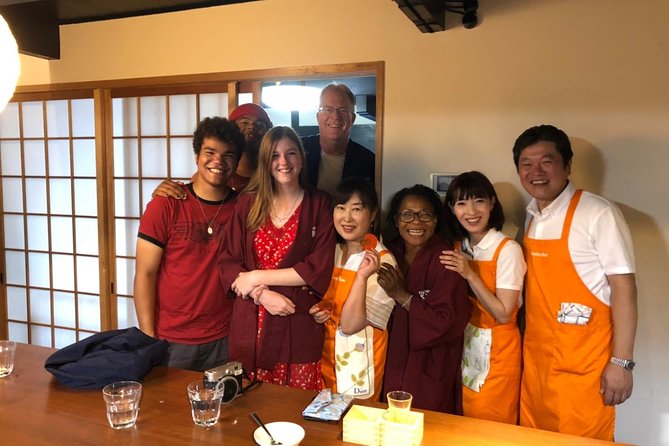
You do not need advanced cooking skills. The explanations are given at a level that accommodates different abilities, and the instructors guide each person through the steps. Children have taken part successfully, including a family with a 10-year-old and a 12-year-old.
That makes this a good choice for families looking for something more engaging than another temple visit. Everyone has a job, and the final meal gives the group a shared reward. The class also suits couples and solo visitors who want an activity with built-in conversation.
The cooking is practical rather than showy. You will chop, mix, season, cook, and assemble food with help nearby. Several instructors may work together, moving ingredients to the stations, answering questions, and cleaning between recipes. This keeps the afternoon on schedule.
If you are an experienced cook, you should still find useful material in the lesson, especially around dashi, Japanese seasonings, and flavor pairings. Just keep your expectations sensible. The class is an introduction to Japanese home cooking, not a specialist course in regional Kyoto cuisine.
Sitting down to eat your own izakaya dinner
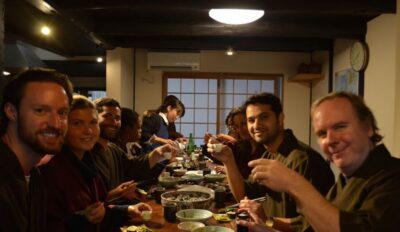
Once the dishes are ready, the group sits down together for dinner. The meal is included in the price, as are the ingredients, apron, and English-speaking instruction.
This shared meal is more than a convenient finish. It lets you taste how the dishes work together, which is central to izakaya-style eating. A soup, vegetable side, fish dish, rice preparation, and small dessert can each be good alone, but the point is the mix of flavors and textures across the table.
Come hungry. Several dishes can add up to a generous meal, and the class is structured around eating what you prepare. Drinks are a separate matter. Food and drinks are listed as excluded unless specified, despite dinner being included, so confirm what is covered. In particular, ask the price before accepting sake. A glass was charged at 600 yen in one case, and the cost was not made clear at the time it was offered.
That is a small issue, but it is useful advice. In Japan, a polite offer can feel like part of the experience, so do not assume an optional drink is included.
What the $71.63 price gives you
At $71.63 per person, this is not the cheapest meal in Kyoto. It is also more than the cost of buying a few prepared dishes at an izakaya. The value comes from the combination of instruction, dinner, ingredients, recipes, and access to a hands-on activity.
You are effectively paying for a half-day cooking lesson and a meal in one. The class also saves you the work of finding unfamiliar ingredients, measuring sauces, and figuring out the right cooking order. For a first introduction to Japanese home food, that can be worthwhile.
The price makes the most sense if you plan to cook Japanese food again. The recipes go home with you, and the techniques, especially dashi and seasoning, can be used beyond the specific menu. If you only want to eat Japanese food, a restaurant will be simpler and likely cheaper. If you want to understand how the food is made, this class gives you more for the afternoon.
Group discounts are available, which can improve the value for families or friends booking together. The maximum is eight people per booking, and the activity itself also has a maximum of eight participants.
Dietary needs and practical limits
Tell the provider about dietary requirements when you book. The staff have accommodated vegetarians and food allergies, including celiac needs, in past sessions. That is encouraging, but you should still provide clear details in advance rather than waiting until you arrive.
Because the menu changes, the exact substitutions may depend on the day’s ingredients. Ask specific questions if you have a serious allergy or need to avoid cross-contact. The available information confirms that adjustments have been made, but it does not promise every possible dietary arrangement.
Service animals are allowed, and the studio is near public transportation. Hotel pickup and drop-off are not provided. Confirmation arrives at booking, and free cancellation is available up to 24 hours before the start time. Within 24 hours, the payment is not refunded, and changes are not accepted.
Who should book this class
I would choose this for someone who wants more than a restaurant meal but does not want a demanding culinary course. It is especially suitable for:
- Families with older children who enjoy practical activities
- Beginners who want clear instruction
- Home cooks interested in sauces, stock, and Japanese ingredients
- Couples looking for a shared Kyoto activity
- Solo visitors who like meeting a small group over food
- Anyone curious about everyday Japanese dishes beyond sushi
It may be less suitable if you want a fixed menu, a quiet private lesson, or a highly traditional noodle-focused class. The menu is seasonal, the group may include different skill levels, and the session can include dishes that are not strictly Japanese.
The teaching style is friendly and structured. Keiko and her team are praised for clear explanations, patience, and careful organization. The instructors also keep the stations tidy and help move the class from one recipe to the next. That behind-the-scenes work matters, because a cooking class can become frustrating when the room is disorganized.
Should you book the Izakaya Style Cooking Class?
Book it if you want to learn how Japanese home cooking actually comes together. The strongest reasons are the dashi lesson, the number of dishes, the useful recipes, and the chance to eat a dinner you prepared yourself.
At $71.63, it is good value for an active three-hour class with food included, especially if you will use the recipes at home. Go in expecting a seasonal menu rather than a fixed list of izakaya classics, and ask clearly about any extra drinks.
For a first Kyoto cooking class, this is an easy choice for most beginners, families, and food-focused visitors. If your priority is a specific dish or a fully private experience, choose something more specialized.
FAQ
Where does the cooking class take place?
The class meets at Cooking Sun Kyoto, 679 Funayacho, Shimogyo Ward, Kyoto, 600-8466, Japan. The studio is described as a traditional wood house, and the exact location is also provided at booking.
What time does the class start?
The activity starts at 2pm.
How long does the class last?
The cooking class lasts approximately three hours.
Is dinner included?
Yes. Dinner made during the class is included. The supplied information also says food and drinks are not included unless specified, so ask what optional drinks cost.
Are cooking ingredients included?
Yes. All ingredients used for the cooking lesson are included.
Is an English-speaking instructor provided?
Yes. The class includes an English-speaking cooking instructor.
How many people can join?
The maximum is eight travelers, and the maximum booking size is also eight people.
Do I receive the recipes?
Yes. You receive the recipes so you can prepare the dishes for friends and family at home.
Can dietary requirements be accommodated?
You should advise the provider of dietary requirements when booking. Vegetarian and allergy accommodations, including celiac needs, have been handled in past sessions.
Is hotel pickup included?
No. Hotel pickup and drop-off are not included. The studio is near public transportation, and the activity ends back at the meeting point.
Can I cancel for a refund?
Yes. You can cancel at least 24 hours before the start time for a full refund. Cancellations or changes made within 24 hours are not refunded or accepted.
More Cocktail Workshops in Japan
- Cartagena: Pub Crawl with Dancing Lessons and Free Shots
★ 4.2 · 211 reviews - Cocktails lessons in Speakeasy
★ 4.5 · 72 reviews - Sip History In a Secret Speakeasy Cocktail Class
★ 5.0 · 40 reviews - Salsa Dance Class and Nightlife Tour in San Juan
★ 4.5 · 33 reviews
Just added around Japan
- Tokyo night out★ 5.0 · 3 reviews
- Izakaya & Bar Hopping Tour Around Aomori Station★ 5.0 · 3 reviews
- Asakusa Foods & Drinks, Culture Nightlife★ 5.0 · 5 reviews
- Tokyo:Shinjuku Ni-chome LGBTQ+ Bar Hopping Tour with Guide★ 5.0 · 2 reviews
- Tokyo: The Best Izakaya Tour in Shibuya★ 4.7 · 15 reviews
- Tokyo: Shinjuku Nightlife Tour with Karaoke and Bar Hopping★ 4.1 · 4 reviews
- Tokyo: Shinjuku Golden Gai Bar Hopping that only locals know★ 5.0 · 5 reviews
- Tokyo: Shinjuku Hidden Japanese Bar Tour (Neon Light City)★ 5.0 · 4 reviews
Kyoto Bar Tours, compared.




Browse the lists this tour appears in